
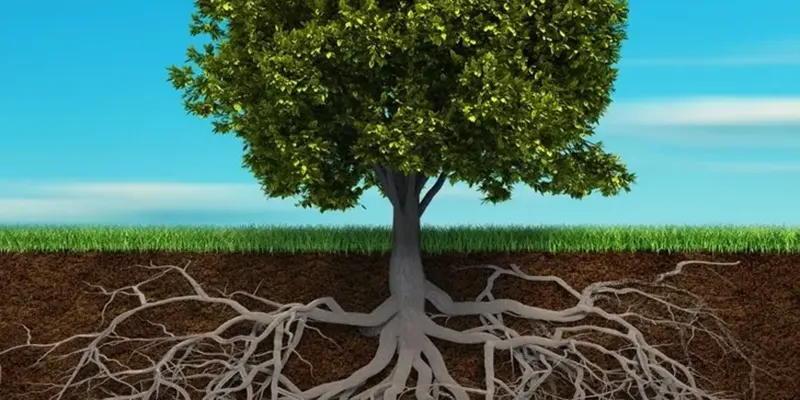
Tree roots make many homeowners nervous, especially when a large tree grows close to the house, driveway, sidewalk, or sewer line. It is easy to picture roots pushing through concrete, cracking foundations, or forcing their way into pipes beneath the yard. The truth is more practical.
Tree roots can cause real problems, but they usually do not destroy solid structures by brute force. More often, they take advantage of conditions that are already vulnerable. They follow moisture, oxygen, loose soil, cracks, gaps, and weak points.
For homeowners in Vancouver, WA, and across Clark County, root concerns are common. Mature trees, wet seasons, older neighborhoods, clay-heavy soils, and aging underground systems can all create situations where roots, concrete, soil, and utilities compete for space. Knowing what tree roots actually do can help you protect your home without jumping straight to unnecessary tree removal.
What Homeowners Should Know About Tree Roots
Tree roots are not underground battering rams. They do not usually punch through healthy foundations, solid concrete, or intact sewer pipes. Roots follow opportunity and grow where conditions allow them to grow. They search for water, oxygen, and usable soil space.
Most absorbing roots are found in the upper layers of soil, often within the top several inches to a couple of feet. That is why root issues often appear near sidewalks, patios, driveways, irrigation lines, and shallow drainage systems before they appear near deeper structural elements.
If a driveway slab is thin, poorly supported, or already moving, roots may lift it. If a sewer pipe has a crack or loose joint, roots may grow into the opening because moisture attracts them. If soil around a foundation expands, shrinks, or heaves, roots may be one part of a larger drainage or soil issue.
That does not mean roots should be ignored. It means the right solution starts with a careful assessment, not assumptions.
Can Tree Roots Cause Foundation Damage?
Tree roots are often blamed for foundation damage, but the foundation itself is not always the real point of failure. In most cases, healthy roots do not break through an intact foundation wall. Concrete and properly built foundation systems are much stronger than roots.
Where trouble can happen is around the soil that supports the foundation. During dry periods, roots may draw moisture from the soil. In clay-heavy or compacted soils, moisture changes can contribute to shrinkage, settlement, or uneven movement. During wet periods, poor drainage can lead to soil expansion or heaving.
Local Insight
Signs that may point to a foundation or soil concern:
- Interior Cracks: New or widening cracks in interior walls
- Stuck Doors/Windows: Doors or windows that suddenly stick or jam
- Uneven Floors: Noticeable settling or sloping in floor levels
- Foundation Gaps: Soil pulling away from the foundation during dry weather
- Water Pooling: Water collecting or standing near the foundation perimeter
- Root Pressure: Visible root bulging beneath shallow exterior concrete
A tree may be involved, but it is rarely the only factor. Drainage, soil type, construction quality, age of the home, grading, and previous repairs all matter.
Can Tree Roots Lift Driveways and Sidewalks?
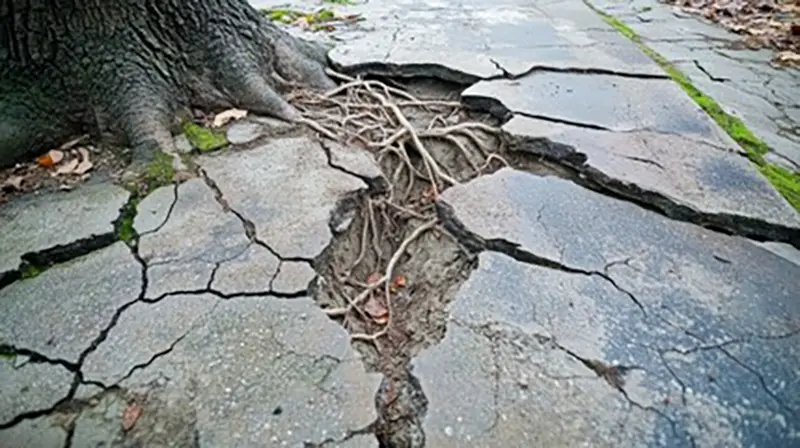
Yes, tree roots can lift driveways, sidewalks, walkways, and patios. This is one of the more common root-related problems homeowners actually see.
Roots grow near the surface where oxygen and moisture are available. If they are growing under a concrete slab that is thin, shallow, poorly supported, or already cracked, they may lift sections of it over time. You might notice a raised edge, a tripping hazard, spreading cracks, or a driveway panel that no longer sits level with the next section.
This does not always mean the tree has to come down. Sometimes the better answer is selective root pruning, hardscape repair, improved soil conditions, or redesigning the walkway to allow more room for the tree. In other cases, if the tree is too close, structurally questionable, or repeatedly damaging critical access areas, tree removal may be the safer long-term choice.
Don’t Cut Roots Casually
Can Tree Roots Grow Into Sewer Lines?
Sewer lines are attractive to roots because they can release moisture, nutrients, and oxygen through small openings. Once fine roots enter a pipe, they can expand into a dense mass that catches debris, slows drainage, and eventually causes backups.
This is more common in older neighborhoods where sewer laterals may be aging, damaged, or made from older materials. In Vancouver, WA, homes with mature trees and older underground infrastructure should pay attention to repeated drainage issues, especially if the same line keeps clogging after cleaning.
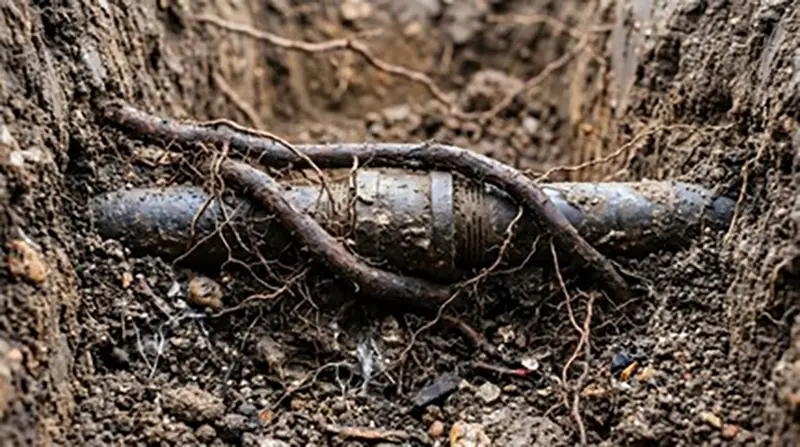
Signs roots may be in your sewer line:
- Sewage Backups: Frequent sewer backups into the home
- Sluggish Drainage: Slow drains throughout the home, especially after rain
- Gurgling Noises: Strange gurgling or bubbling sounds from toilets and drains
- Overgrown Patches: Unusually green or lush patches in the yard above the line
- Persistent Clogs: Recurring blockages even after professional cleaning
A plumber can inspect the pipe with a camera, and a tree specialist can help determine whether nearby trees are contributing.
Shallow Utilities and Landscape Systems Are More Vulnerable
Not every root concern involves a foundation or sewer line. Many common problems involve shallow systems that were never designed to resist root growth.
Tree roots can interfere with irrigation lines, landscape drainage, French drains, edging, paver bases, thin concrete pads, and small retaining features. These systems sit close to the surface, where many roots naturally grow.
Why Root Problems Happen
Root problems usually come down to a few conditions working together.
One common issue is tree placement. A tree planted too close to a driveway, foundation, sewer lateral, or sidewalk may not cause trouble when it is young. Years later, as the canopy and root system expand, that same tree may no longer fit the space.
Soil compaction is another issue. Compacted soil can force roots closer to the surface, where they are more likely to interact with concrete, pavers, and shallow utilities. Poor drainage can also pull roots toward certain areas, especially if water consistently collects near a pipe, slab, or foundation wall.
Hardscape installation matters too. Driveways, walkways, and patios installed without accounting for root expansion may fail sooner around mature trees.
A stressed tree may also expand its root system in search of moisture. That is one reason overall tree health matters. Proper tree pruning, tree trimming, watering practices, and soil care can all influence how well a tree coexists with the rest of the property.
Warning Signs Worth Investigating
Homeowners should keep an eye on changes that develop over time. One small crack or uneven spot does not automatically mean there is a serious root issue, but patterns matter.
- Lifting Driveway: A driveway that keeps rising or buckling each season
- Uneven Sidewalk: A sidewalk that becomes increasingly uneven year after year
- Sewage Backups: Repeated sewer backups, especially after heavy rain or irrigation
- Soil Heaving: Ground swelling or upheaval near the foundation or tree base
- Ground Depressions: Sunken areas or depressions developing near the tree trunk
- Standing Water: Water pooling or accumulating around the tree after rain
- Spreading Cracks: Existing hardscape cracks that grow wider or longer over time
The most important thing is not to jump straight to removal. A professional assessment can help determine whether the tree is actually contributing to the problem, whether the issue is unrelated, or whether several factors are interacting.
How a Tree Specialist Evaluates Root Concerns
A qualified tree specialist looks at more than the visible root. At Priority Tree Service, root-related concerns are evaluated by examining the tree, the surrounding site, and the affected structure or system. A complete assessment may include:
- Reviewing the tree species and its typical root behavior
- Inspecting the root flare condition for buried, girdled, or compromised roots
- Checking soil moisture patterns around the tree and structure
- Measuring distance from nearby structures, utilities, and hardscape
- Reviewing drainage and irrigation habits that may be pulling roots toward the area of concern
- Identifying visible root defects, hardscape movement, and signs of pre-existing infrastructure failure
This kind of assessment helps homeowners avoid removing a healthy tree unnecessarily or ignoring a root problem until it becomes more expensive. It should also clarify whether pruning, trimming, hardscape repair, drainage improvements, or tree removal is the best next step.
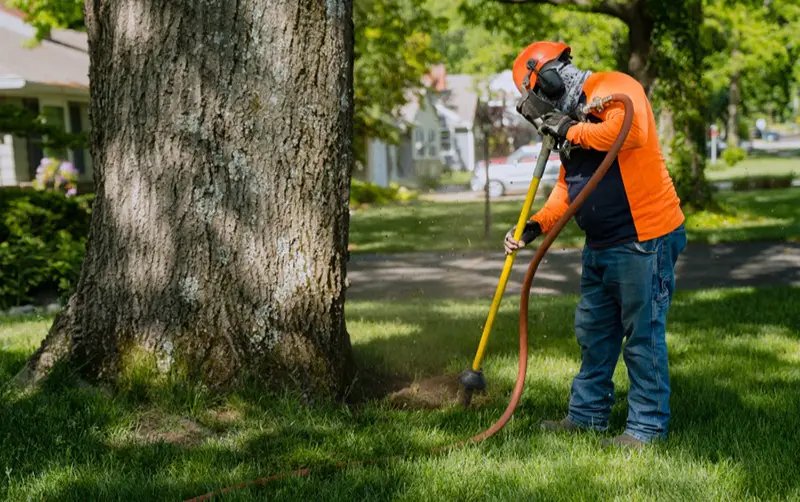
When Tree Removal Is Necessary, and When It Is Not
Manage
Selective root pruning is feasible
Drainage can be improved
Hardscape can be repaired
Root barriers can protect areas
Tree is healthy and sound
Remove
Tree poses safety risk
Tree is in decline
Poorly located near infrastructure
Ongoing damage cannot be managed
Structural roots need cutting
How to Protect Your Home From Tree Root Damage
For existing trees, keep an eye on drainage and soil conditions. Do not overwater near the foundation or allow irrigation leaks to go unresolved. Make sure downspouts move water away from the house. If you notice concrete lifting or recurring sewer problems, investigate early rather than waiting for the issue to become severe.
Pro Tip
Frequently Asked Questions
Do tree roots really damage foundations?
Tree roots usually do not break through a solid, intact foundation. Foundation problems are more often tied to soil movement, drainage, age, construction conditions, or existing cracks.
Can tree roots lift a driveway?
Yes. Roots can lift driveways, sidewalks, and patios, especially when the concrete is thin, shallow, cracked, or poorly supported.
Do tree roots break sewer pipes?
Tree roots usually do not break healthy sewer pipes. They grow into pipes that already have cracks, loose joints, deteriorated seals, or other openings.
Should I remove a tree if its roots are near my house?
Not automatically. Many trees near homes can be managed with pruning, trimming, drainage improvements, root evaluation, or site adjustments. Removal may be necessary if the tree is unsafe, declining, poorly located, or causing damage that cannot be managed.
The Bottom Line
Tree roots can cause damage, but not always in the way homeowners imagine. They usually do not force their way through healthy foundations, solid concrete, or intact sewer lines. They follow opportunity. Moisture, weak spots, shallow systems, poor drainage, compacted soil, and aging infrastructure are often what turn ordinary root growth into a real property concern.
For Vancouver, WA homeowners, the best approach is to look at the whole picture before making a decision. A lifted driveway, sewer backup, or crack near the foundation deserves attention, but it does not always mean the tree is the villain.
If you are worried about tree roots on your property, Priority Tree Service can help you understand what is happening below the surface and what your best options are. Call for an estimate for tree pruning, tree trimming, or tree removal in Vancouver, WA.
