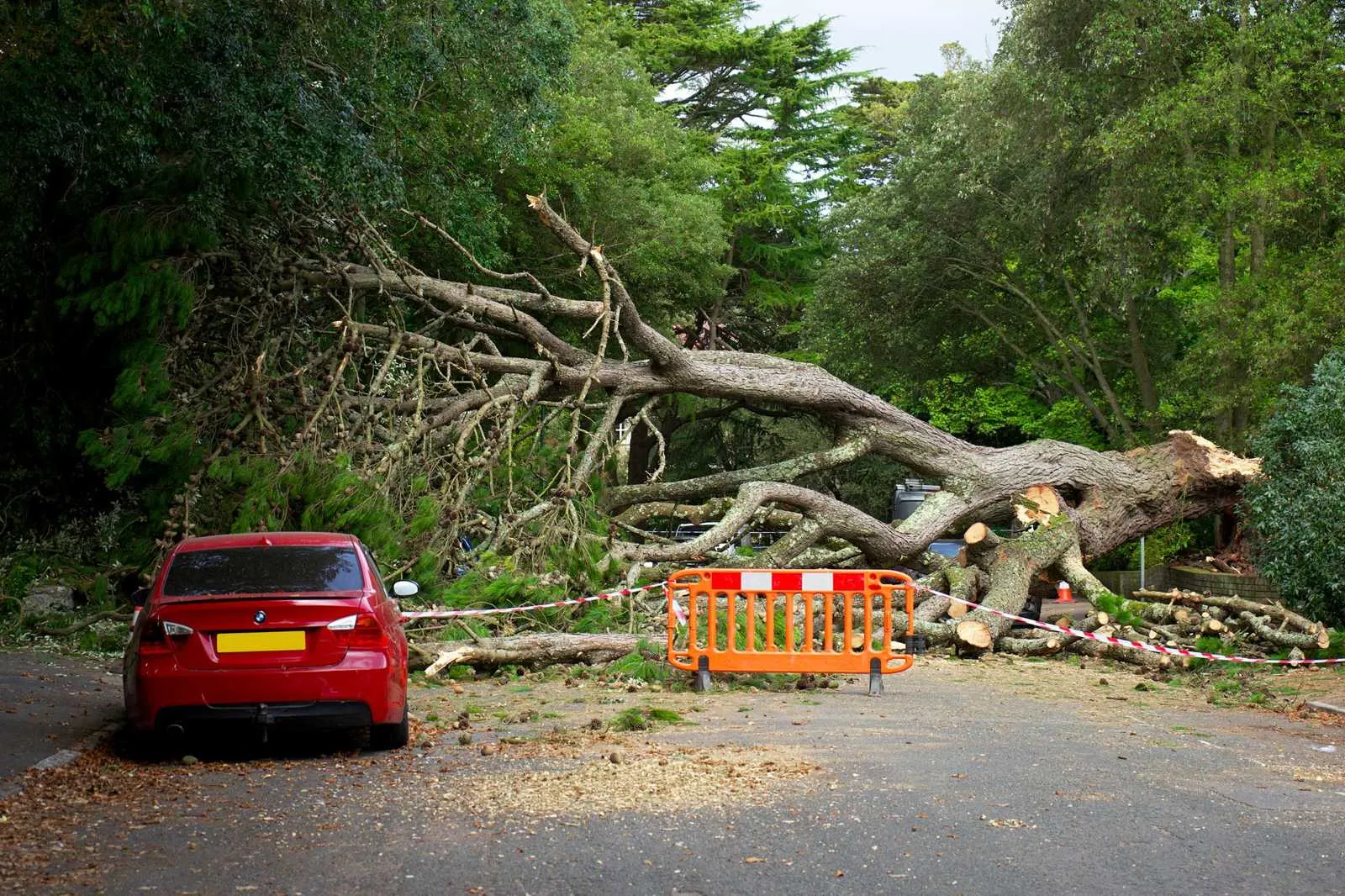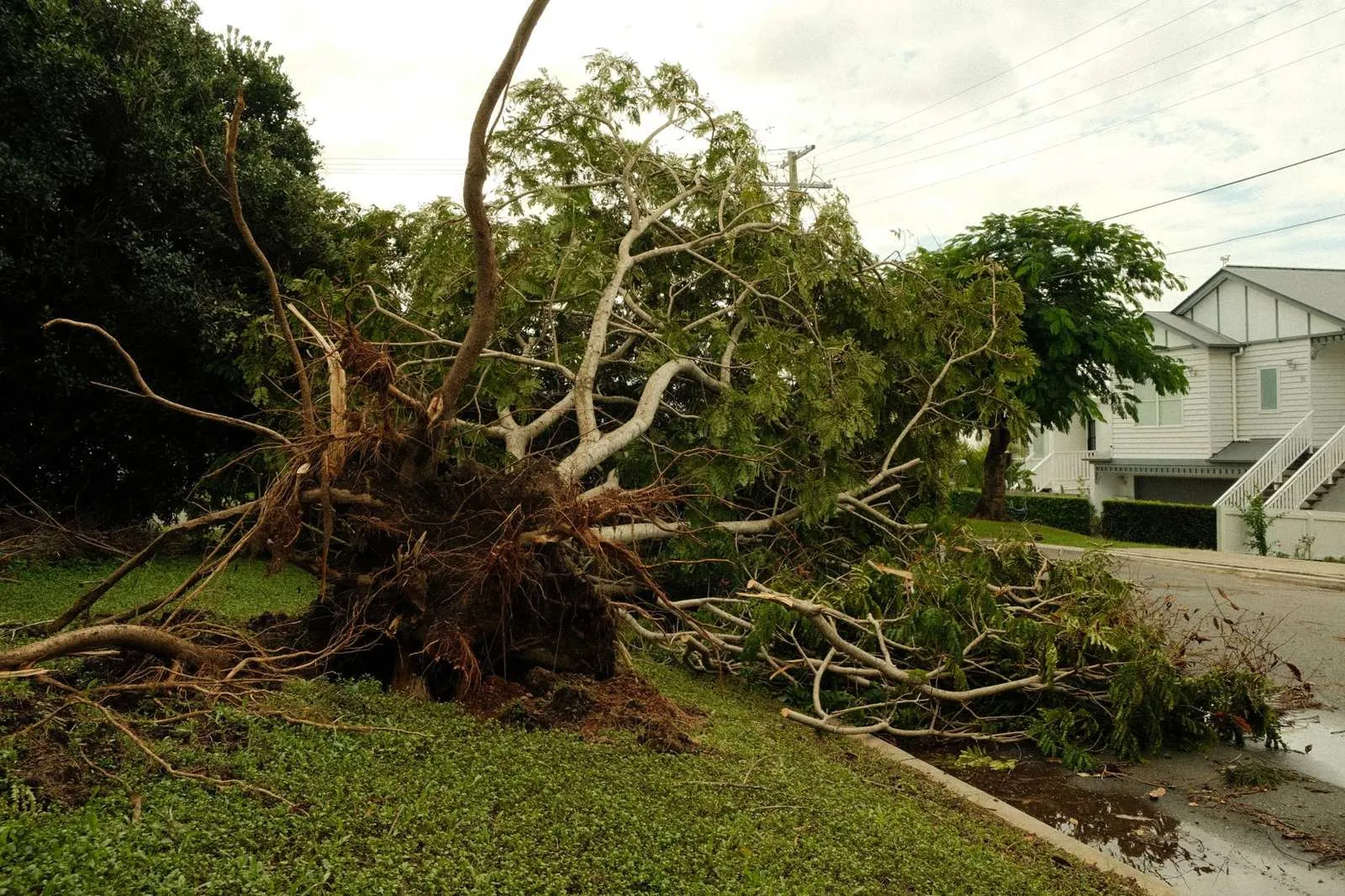

A windstorm rolls through, and the next morning your neighbor's tree is lying across your roof, your fence, or your car. The first question is always the same: who pays? The plain answer feels backwards to most people. When a healthy tree falls in a storm, the cost usually lands with whoever owns the property it fell on. That is you, through your own homeowner's insurance, even though it was your neighbor's tree. It does not feel fair, but in Washington that is typically how it shakes out.
This is general information based on general Washington legal principles as of publication, not legal advice. Outcomes are fact-specific. For your situation, talk to an attorney or your own insurance agent.
The general rule: a healthy tree in a storm is nobody's fault
Washington courts have treated a healthy tree that falls in high wind as an act of nature. In a 2000 case, healthy hemlocks blew onto a neighbor's home in a windstorm, and the court held the tree owners had no duty to remove healthy trees just because wind might one day topple them. No negligence, so no liability, and the loss stayed where it landed. So if a sound tree hit your house and the wind brought it down, your neighbor generally is not on the hook, and your own policy is your first line of coverage no matter whose tree it was.
The exception that changes everything: a tree the owner knew was hazardous
Here is where it can flip. If the tree was already dead, diseased, cracked, clearly leaning, or otherwise visibly hazardous, and the owner knew or reasonably should have known, the picture changes. An owner aware of a defect has a duty to act, and ignoring an obviously dying tree that then falls can shift liability to its owner. The standard is reasonable, not paranoid. Courts generally look at whether a reasonable person would have noticed the problem, and nobody is required to test every tree for rot you cannot see from the ground. Clark County's own guidance puts it plainly: if your neighbor took reasonable care and the tree did not seem, to a reasonable person, to be threatening to fall, they probably are not liable. If the tree was poorly maintained and your neighbor knew or should have known it was a threat, they could be.
Even then, you usually file with your own insurance first. If negligence is clear, your insurer may pursue the neighbor's insurer afterward to recover what it paid. That is called subrogation, and if it succeeds you may get your deductible back, though it is not guaranteed.
What your homeowner's insurance actually covers
When a tree hits an insured structure like your house or a detached garage, standard dwelling coverage generally pays for the structural and contents damage regardless of whose tree it was. As the Insurance Information Institute notes, insurers rarely spend time tracing where a tree grew. You will still owe your deductible.
Debris removal is the part that surprises people. Coverage for hauling the fallen tree away is separate and usually capped, often a few hundred to a thousand dollars, though it varies by insurer and policy. Here is the gap worth knowing: if a tree falls in your open yard and hits nothing insured, many policies will not cover the removal at all. That cleanup is generally your own out-of-pocket cost, and fence coverage varies too. To know your own numbers, read your declarations page or call your agent.
Overhanging branches: what you may do, and the line you must not cross
Branches over your yard are a common frustration, but you do have rights. Under the self-help rule, you may trim a neighbor's tree back to the property line at your own expense. But only to the line, not past it. According to Clark County's tree overhang guidance, you may not enter the neighbor's property to trim without permission, and you may not cut the tree down or destroy its health or shape by improper trimming.
That matters because of Washington's timber trespass statute, RCW 64.12.030. Cut, injure, or remove a tree on someone else's land without lawful authority, and a court must award treble damages, three times the value of the tree. It is mandatory, and even ordinary yard trees can be worth thousands, so tripling that gets expensive fast. If a trunk straddles the property line, it is a boundary tree, jointly owned by both neighbors, and neither of you may remove it without the other's consent. When you are not certain where your line runs, get a survey before a saw ever touches wood.
The conversation that beats all of this: before anything falls
Honestly, the best outcome here is the one where no tree ever falls and no insurer is ever called. If you are worried about a neighbor's tree leaning toward your house, start with a kind conversation over the fence. Most people do not want their tree crushing your roof any more than you do, and they may simply not have looked up lately. Lead with concern, not a threat.
If the worry is real, the next step is a written record. Clark County's own guidance suggests getting an arborist report to determine whether the tree is truly a hazard, then sending it to your neighbor and your insurer by certified mail. That establishes that they knew, which is exactly the knowledge that can shift liability if they do nothing and the tree later fails. If you are not sure what to look for, our guide on how to spot a hazardous tree walks through the warning signs.
What to do the moment a tree comes down
If it has already happened, work in this order:
- Stay clear. Treat any downed power line as live, keep well back, and if the tree is tangled with utility lines call Clark Public Utilities right away. They will handle trees on their equipment rather than have you near it.
- Take photos before you move anything, from several angles, for your insurer.
- Call your own insurance carrier, open a claim, and ask about debris removal limits.
- Get the tree handled safely. Storm-damaged trees are under tension and dangerous to cut. Our emergency tree service is available around the clock for exactly this.
We are Priority Tree Service, a family-run company in Vancouver, WA, and our ISA Certified Arborist looks at trees like these across Clark County. If a tree worries you, or one has already come down, give us a call and we will tell you straight what we see.