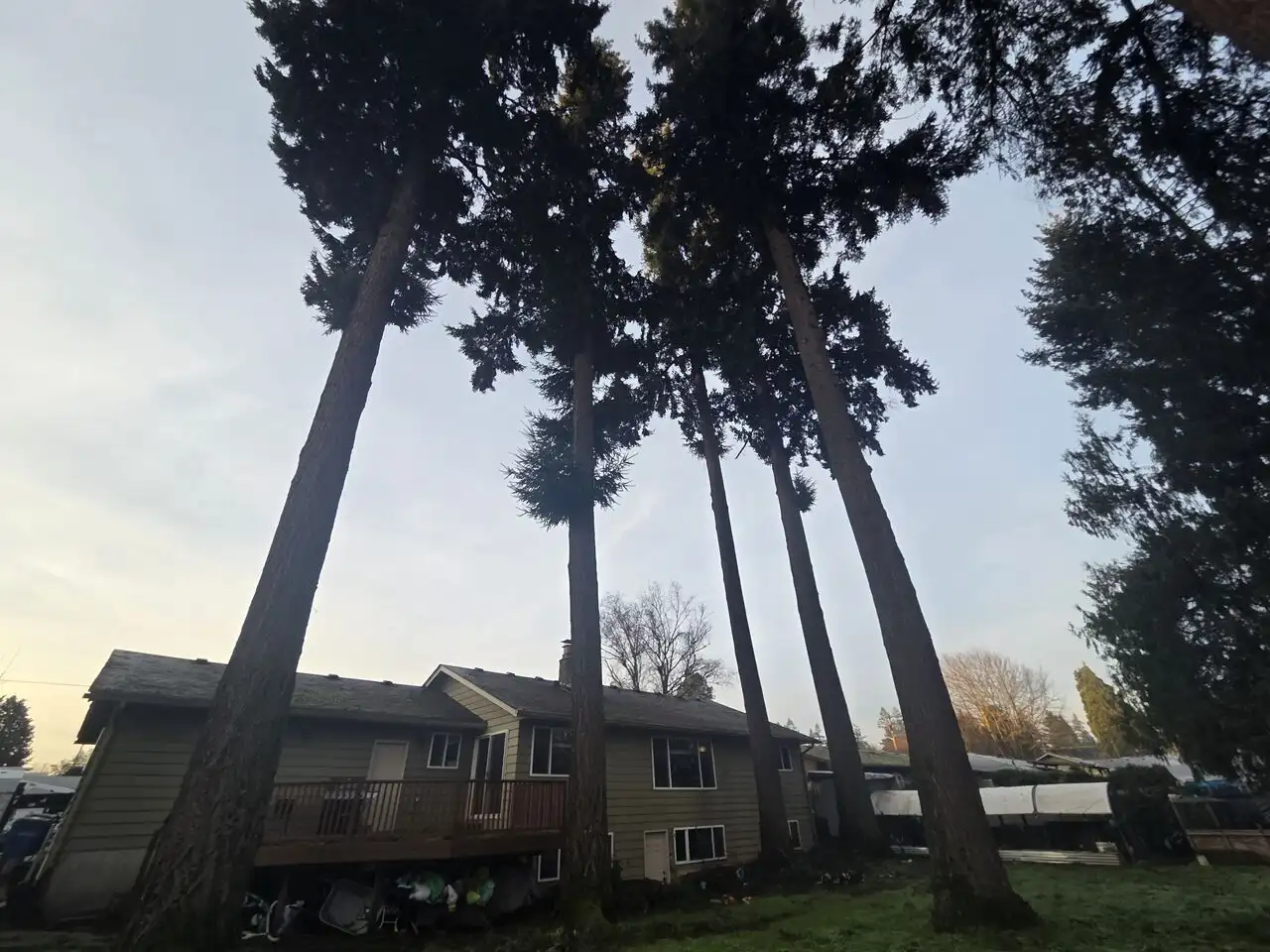
If you have driven around Clark County lately, you have probably seen it: western red cedars going brown at the top, thinning out, some clearly dead while the trees around them look fine. It is one of the most common calls we get right now. A homeowner watches a cedar turn rusty and bare and asks the honest question, "is my cedar dying?" Sometimes the answer is yes. But not always, and the difference matters for what you do next.
Normal fall browning versus real dieback
This one is worth getting straight, because a lot of worried calls turn out to be nothing. Cedars naturally shed their older foliage. In late summer and fall, the older needles closer to the trunk turn brown or orange and drop, while the rest of the tree stays green and full. That is normal seasonal flagging, it happens every year on healthy cedars, and Washington DNR even puts it on a "do not report" list because so many people mistake it for the real problem.
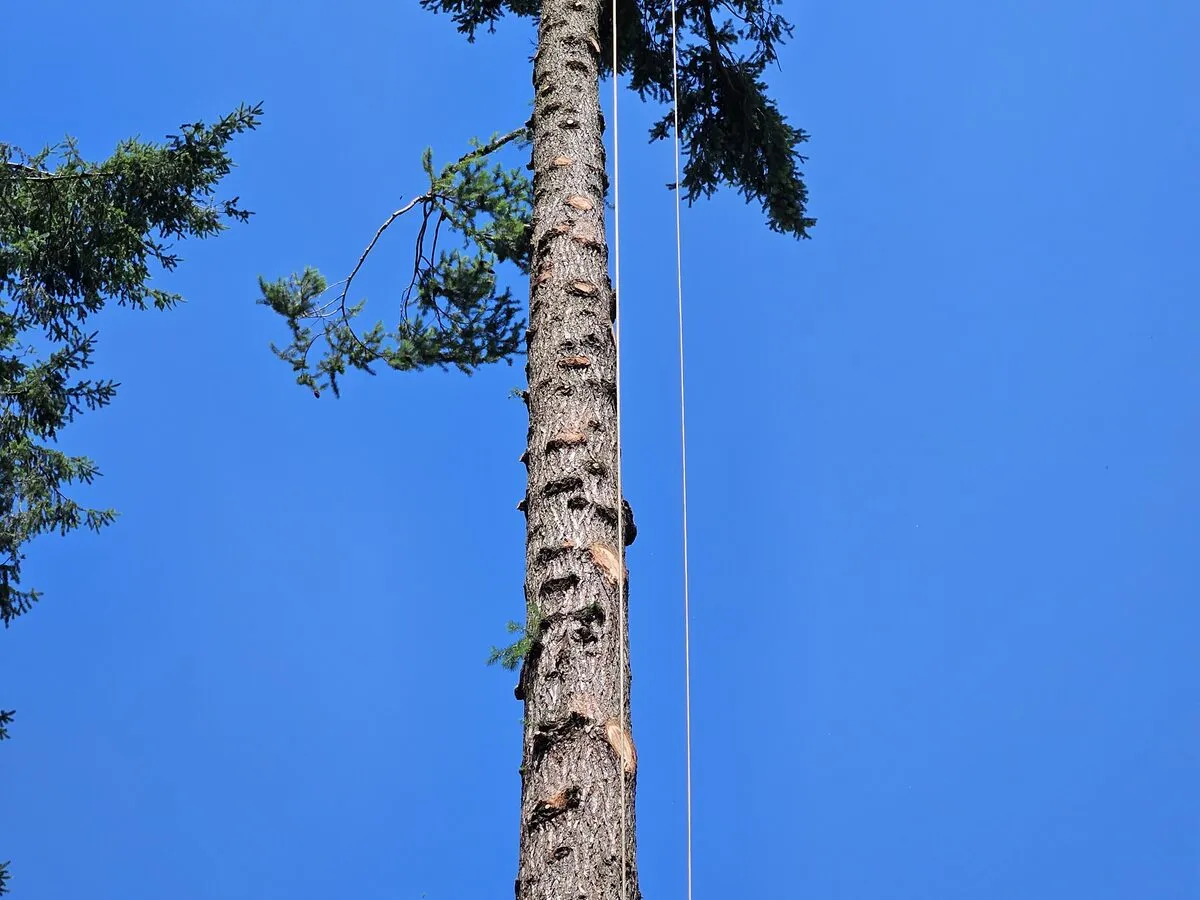
Real dieback looks different, and the pattern is the tell. It shows from the top down. Whole branches go from green to brown, the top dies back and leaves a bare, dead spike while the lower branches are still alive, and the crown thins enough that you notice from across the yard. The clearest difference: seasonal flagging comes and goes with the season, but true dieback does not reverse itself and gets a little worse each year. If it is dropping older interior needles in September and looks full otherwise, it is most likely just being a cedar.
So what is actually killing them?
The short version is heat and drought, on a tree built for cool, wet, shaded ground. Our hotter, drier summers are exactly the kind of stress western red cedar handles worst. The 2021 heat dome was a local turning point. Temperatures hit a record 115 degrees in Vancouver, WA, and as The Columbian reported, tree loss became especially noticeable afterward. Ryan Savaikie, the lead forester for Clark Conservation District, put it plainly in that same article: the cedars are struggling with "top-down deaths from either the heat dome, which burned out a lot of them, or just general warmer, drier climate."
It is worth being honest here. Insects and fungi do show up on these trees, but researchers at WSU, the USDA Forest Service, and Washington DNR agree those are secondary, moving in on trees that are already stressed rather than starting the problem. Heat and drought is the leading explanation, though even the agencies studying it call that the predominant theory, not a closed case. It is where the best research points, not something anyone has fully proven. Either way, spraying a browning cedar for bugs or fungus will not fix the problem. If you want the science firsthand, the USDA Forest Service fact sheet and the Washington DNR handout both lay it out.
Can a stressed cedar be saved?
Sometimes, if you catch it early. A cedar that is thin and stressed but still mostly green has a real chance if you take the pressure off it. One that has already lost its top and most of its crown does not.
What helps is water, given the right way. Conifers hide drought stress well, so by the time the needles brown, the roots have been hurting for a while. The answer is deep, infrequent soaking, not a light daily sprinkle. Arborists generally suggest wetting the soil down six to twelve inches in the outer part of the root zone, every couple of weeks from July through September, using a slow soaker hose rather than a sprinkler. The Clark Conservation District gives the same advice locally. As Savaikie put it, "getting deep soaks during very hot weather events can be pretty helpful over summer."
A few more things help, and a couple of common instincts do not:
- Mulch. A ring of arborist wood chips three to four inches deep and a few feet wide holds moisture and keeps the roots cooler. Pull it back a couple inches from the trunk so the base can breathe.
- Keep the root zone loose. Compacted soil from parking, foot traffic, or construction squeezes out the water and air the roots need.
- Skip the fertilizer and the sprays. Feeding a stressed tree pushes new top growth its roots cannot support, and no spray or injection fixes dieback, because it is a water and heat problem, not an infestation.
When it is past saving
There is no magic percentage where a cedar is officially gone, so be wary of a tidy number. But once the top is dead and most of the crown has gone brown with no new green over a full season, it has lost the ability to recover, and watering will not bring it back.
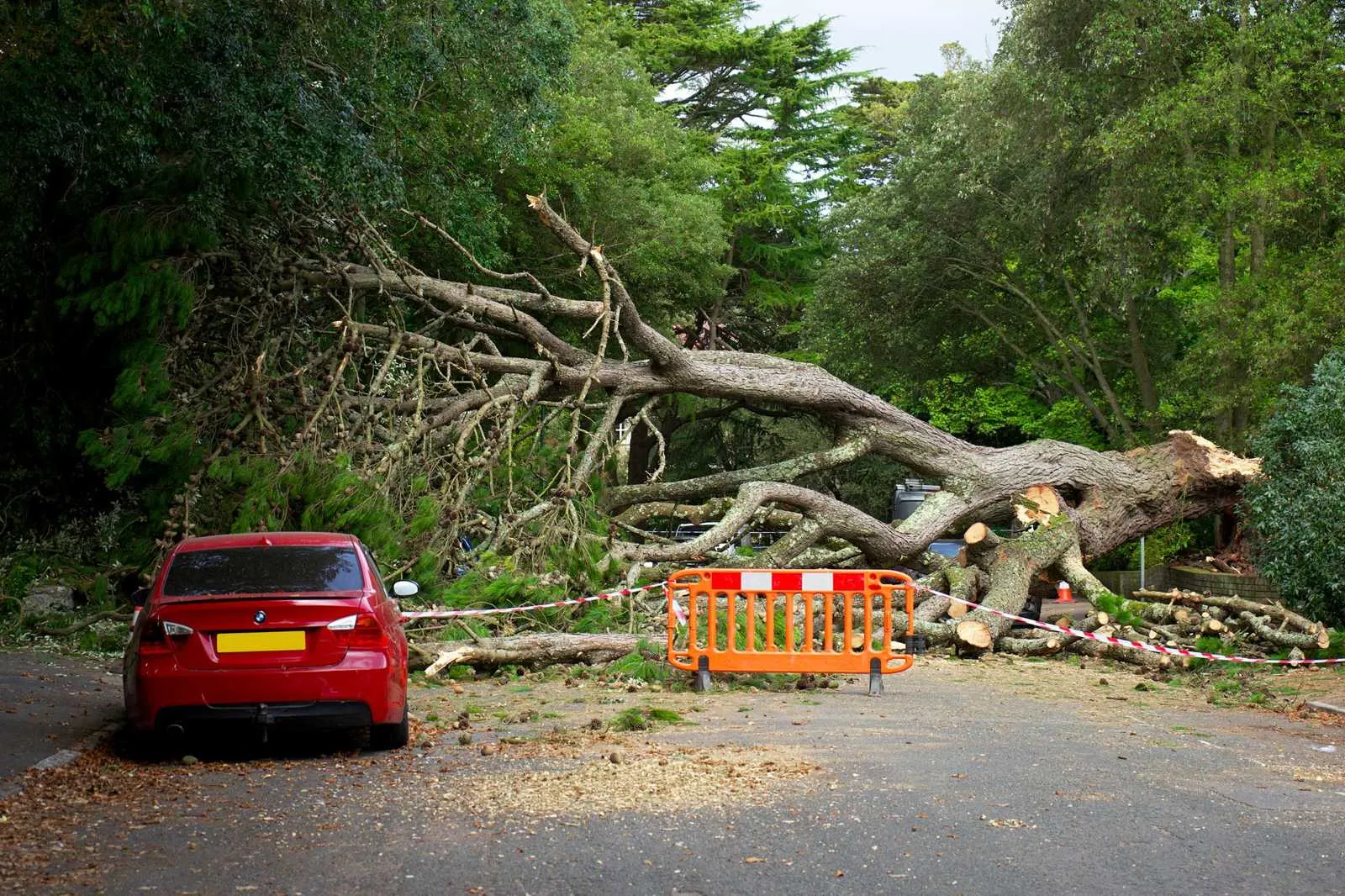
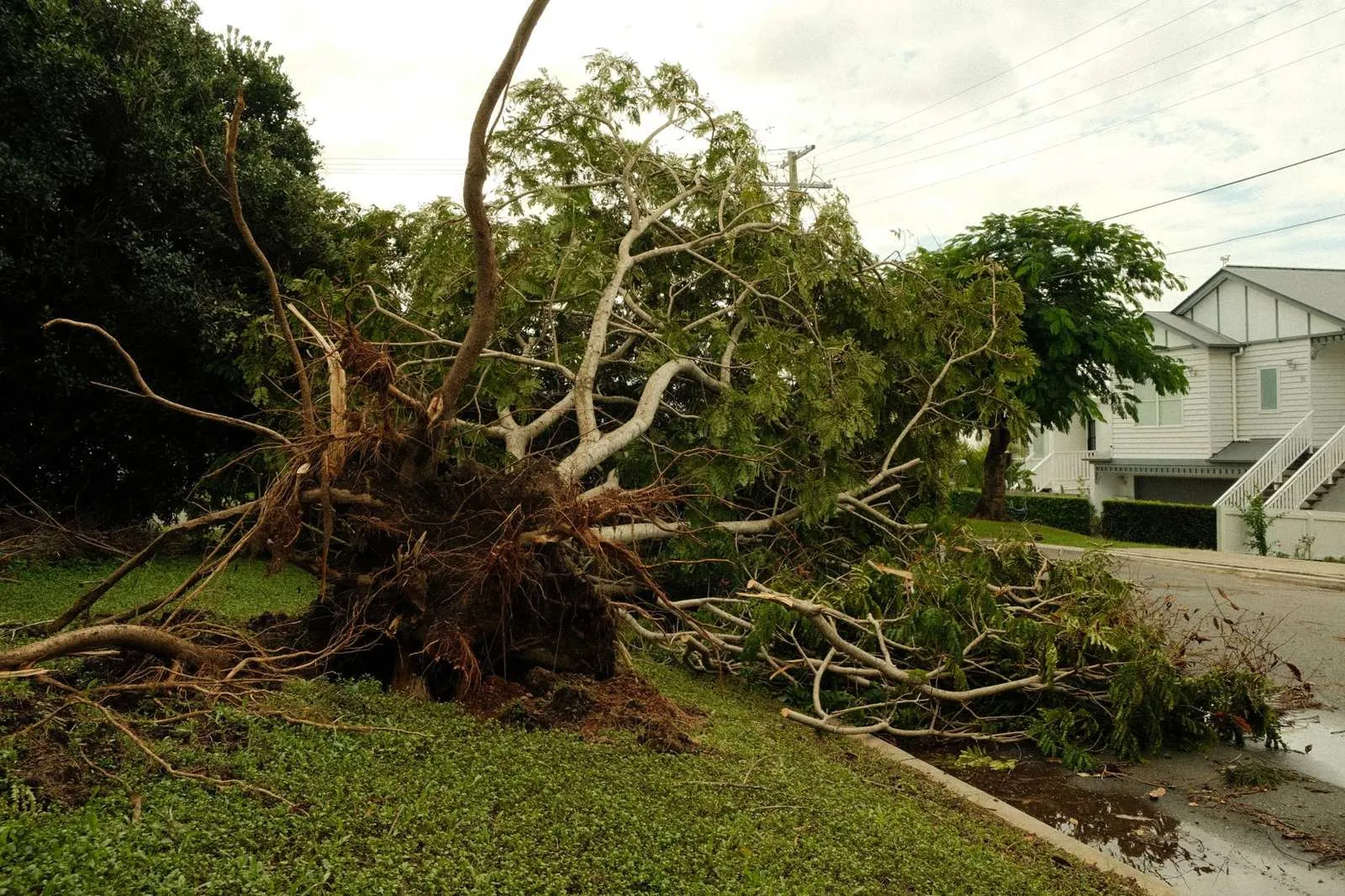
The part people get wrong is thinking a dead cedar is safe to leave alone because cedar wood is famous for lasting. That reputation is about cured cedar lumber, the fence boards and shakes that resist rot for decades, not a standing dead tree. A dead cedar loses the flexibility that lets its limbs bend in the wind. The branches turn dry and brittle and start coming down, sometimes in a storm and sometimes on a still day, and they usually become a hazard well before the trunk fails. A dead cedar over your house or driveway is not something to leave for years and hope on. Our guide on when a tree needs to come down covers the warning signs, and when a cedar is genuinely done, planned tree removal is the safe answer. If you want a documented read first, an arborist report gives you that.
Caring for the ones that can make it
Cedars are part of what makes this corner of Washington look like itself, and it is hard to watch so many of them go. Some stressed this badly are not coming back, but plenty can still be helped, and the trees that get a little water and shade through a hot summer often hang on just fine. The right approach is a mix of honesty and effort: care for the ones that have a fighting chance, and be realistic about the ones that do not. If you have a cedar you are unsure about, that is the kind of thing we are glad to come look at. As an ISA Certified Arborist serving Clark County, Priority Tree Service will tell you straight whether yours can be saved or whether it is time to let it go.