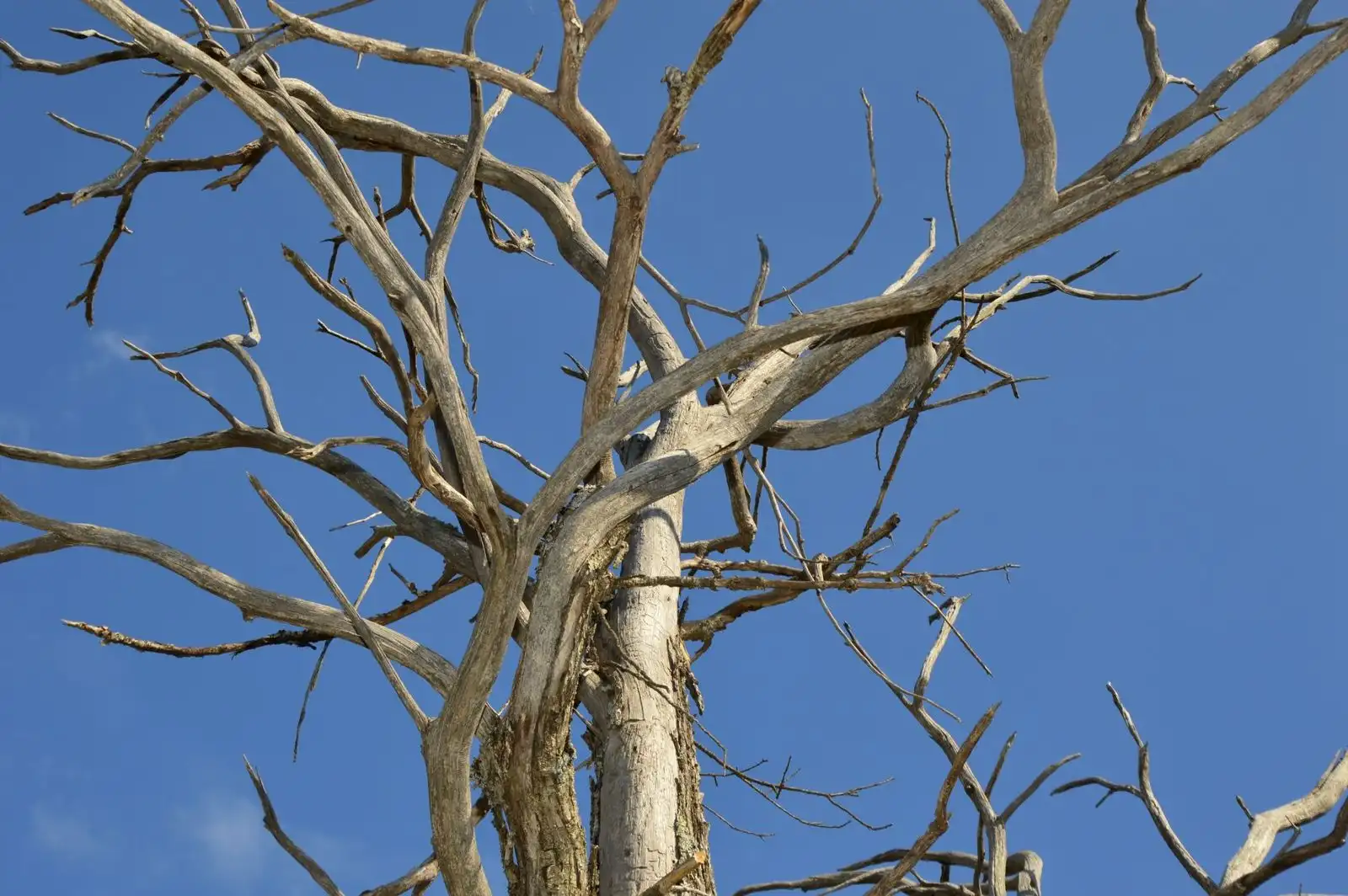
The leaves look thin this year, a few top branches are bare, and now you're wondering: is my ash tree dying? Since the emerald ash borer was confirmed in Vancouver, WA in August 2026, that's a fair worry. But a declining ash doesn't automatically mean the beetle. Drought, wet roots, and leaf disease can make an ash look rough too, and the signs overlap.
Here's how to tell the difference, what to look at on your own tree, and when it's time to have an arborist look. If you aren't sure the tree is an ash at all, start with our guide to identifying an ash tree and emerald ash borer damage.
Is My Ash Tree Dying? Start With What You Can See
Stand back and look at the whole crown first, ideally in summer when the tree should be fully leafed out. A healthy ash has an even, full canopy. Then check what kind of thinning you have, because the pattern tells you a lot.
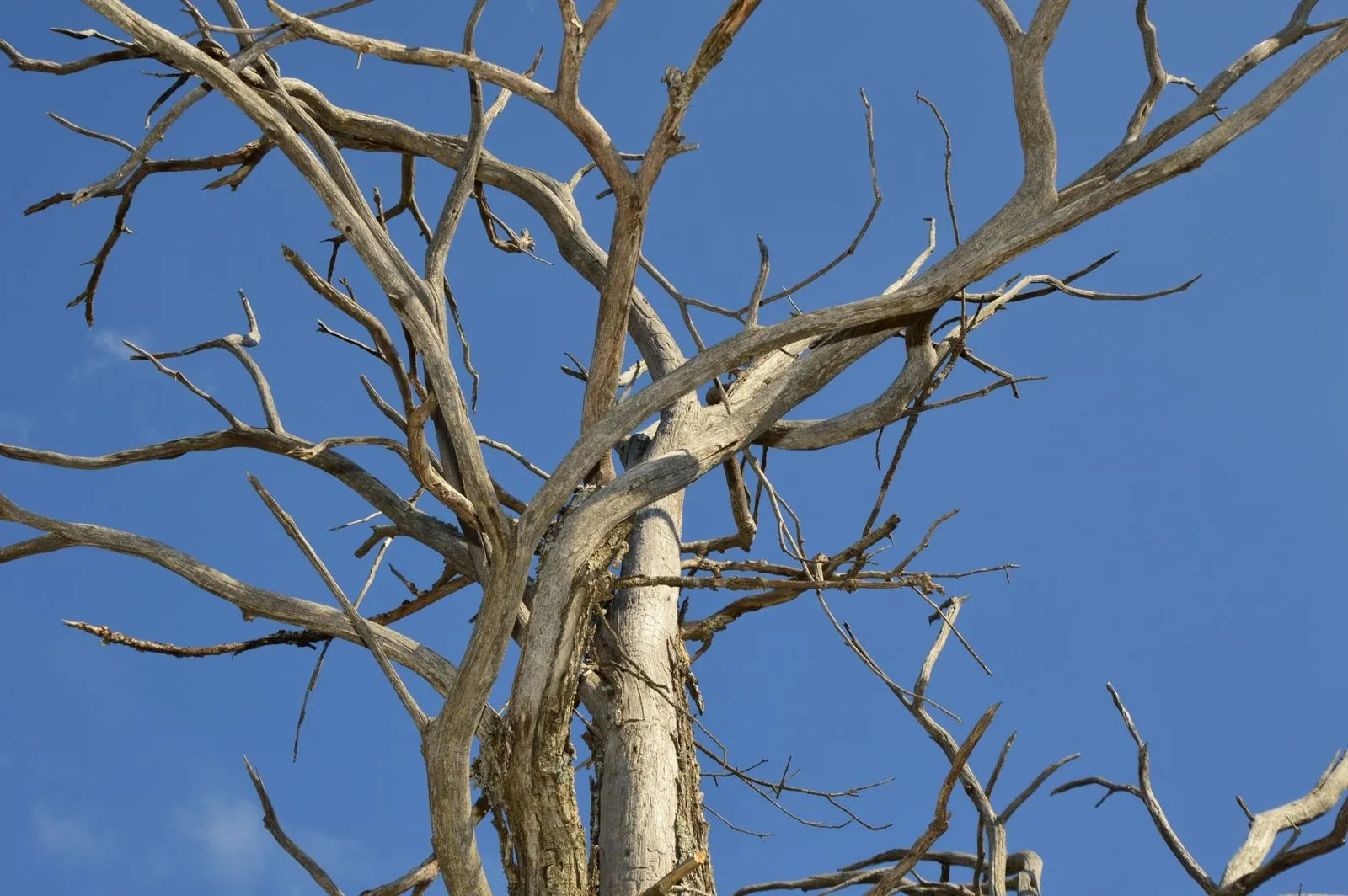
Oregon State University Extension describes emerald ash borer decline as a thinning crown with dead branches in the upper part of the tree. The City of Vancouver likewise says thinning leaves typically start at the tops and sides. Dieback that begins high and keeps working downward over a couple of seasons is the pattern that deserves a closer look.
A single dead branch, a few brown leaves in late summer, or a lopsided crown because a neighbor's tree is shading one side is a different story. Those are common and often not serious.
Signs That Point Toward Emerald Ash Borer
No one sign proves it, but several together raise the odds. These are the ones the agencies list.
- D-shaped exit holes. The City of Vancouver calls these the definitive sign. According to Oregon State University Extension, they're small, about 3 millimeters across, on the outer bark.
- S-shaped tunnels under the bark. Larvae feed in winding galleries just under the surface. You'd only see these where bark has split or been removed.
- Woodpecker damage. The Washington Invasive Species Council says heavy woodpecker damage on an ash is a possible sign, since woodpeckers feed on the larvae.
- Sprouts on the trunk or base. OSU lists epicormic branches, which grow from dormant buds, as a symptom of a stressed ash.
Decline from the beetle isn't quick. OSU says a tree can take two to four years, or longer, to die once symptoms start.
Other Reasons an Ash Tree Declines
This is the part people skip, and it matters. Many ash problems have nothing to do with the beetle, and some are easier to fix.
Drought and heat. OSU lists drought, heat, stem and twig diseases, and animals browsing foliage as possible causes of dead tops or partial crown dieback in Oregon ash. Clark County has had a run of dry summers, and trees that are already stressed show it first in the crown.
Too much or too little water at the roots. Oregon ash grows in wet ground, but OSU notes that changes in the water table and excessive flooding can kill stands. A low corner of the yard that has been drained, filled, or paved over can stress a tree for years.
Leaf disease. Ash anthracnose is a fungus present in the Pacific Northwest. The Pacific Northwest Plant Disease Handbook says it spreads in wet spring weather and starts as small water-soaked spots on young tissue, which can later turn into brown or tan blotches on distorted leaves. Severe infections can cause some defoliation or dieback in lower limbs, which is different from the top-down thinning of EAB.
Other insects and sapsuckers. OSU says several native borers may feed on stressed ash but don't significantly contribute to tree mortality, and their exit holes are usually oval or round rather than D-shaped. Red-breasted sapsuckers leave oval wells in rows, which look nothing like the neat D-shaped holes of EAB.
A Quick Way to Sort Out What You're Seeing
| What You See | Points Toward |
|---|---|
| Thinning that starts at the top and sides and gets worse each year | Emerald ash borer, or long-term stress |
| Small D-shaped holes in the bark | Emerald ash borer |
| Round or oval holes, or oval wells in neat rows | Native borers or sapsuckers |
| Brown spots and blotches on spring leaves, lower limbs affected | Anthracnose |
| Wilting and browning in a hot, dry summer | Drought or root stress |
Treat the table as a starting point, not a diagnosis. As OSU points out, emerald ash borer can be hard to tell apart from other damage, because ash often has damage from common pests and diseases at the same time.
What the Beetle Situation Is Right Now
On August 19, 2026, the USDA confirmed that a beetle collected in Vancouver was an emerald ash borer, Washington's first confirmed detection. As of the August announcements, an infestation site had not been made public, so nobody can honestly say whether it is in your neighborhood. Our post on what was confirmed in Vancouver, WA lays out the timeline.
The City of Vancouver asks people not to move firewood, since larvae can survive in green wood. It also says tree removals require a permit, so check before cutting an ash. You can report a suspected sighting through the Washington Invasive Species Council.
Should You Treat It, Replace It, or Wait?
Once you know your ash is healthy enough to consider, the next question is whether protecting it makes sense. We use the thresholds published by Oregon's Department of Forestry.
- A healthy ash six inches in diameter or larger is a good candidate for treatment.
- Treatment stops being reliable once a tree has lost more than about 30 percent of its canopy.
- Treatment is a long commitment, because the beetle stays in the landscape and a protected tree stays on a schedule.
That's why the dying question comes first. A tree that is already well past 30 percent canopy loss is usually a removal and replanting decision, while a healthy tree with a thinning crown may have time. If the cause is drought or roots, treating for a beetle won't help.
When you want a straight answer, our emerald ash borer treatment starts with an in-person evaluation by our ISA Certified Arborist, who identifies the tree and gives you a recommendation. If a tree is a candidate, the trunk injection is performed by a licensed pesticide applicator. If it isn't, we'll tell you that, too. An arborist report is also available if you need a written assessment.
Questions People Ask About Dying Ash Trees
How Can I Tell If My Ash Tree Is Dead or Just Dormant?
Scratch a small twig with a fingernail in spring. Green and moist underneath means alive, and brown and dry means dead on that branch. If no branches leaf out and the bark is peeling or woodpecker-flaked, the tree may be dead. An arborist can confirm.
Does a Thinning Ash Mean It Has Emerald Ash Borer?
Not by itself. Drought, root stress, and disease cause thin crowns too. The beetle is more likely if the thinning begins at the top and sides, worsens year over year, and comes with D-shaped exit holes.
How Do I Know My Tree Is Actually an Ash?
Ash has opposite buds, diamond-shaped ridged bark, five to nine leaflets per stalk, and paddle-shaped seeds, according to the City of Vancouver. Opposite branching is the fastest check.
Can a Declining Ash Be Saved?
Sometimes. If the cause is drought or roots, fixing the cause can help. If the beetle is involved, treatment only works reliably while the canopy is still mostly intact, so an early look matters.
If you're not sure what's happening to your ash, contact Priority Tree Service for a free estimate and an in-person look anywhere in Clark County.