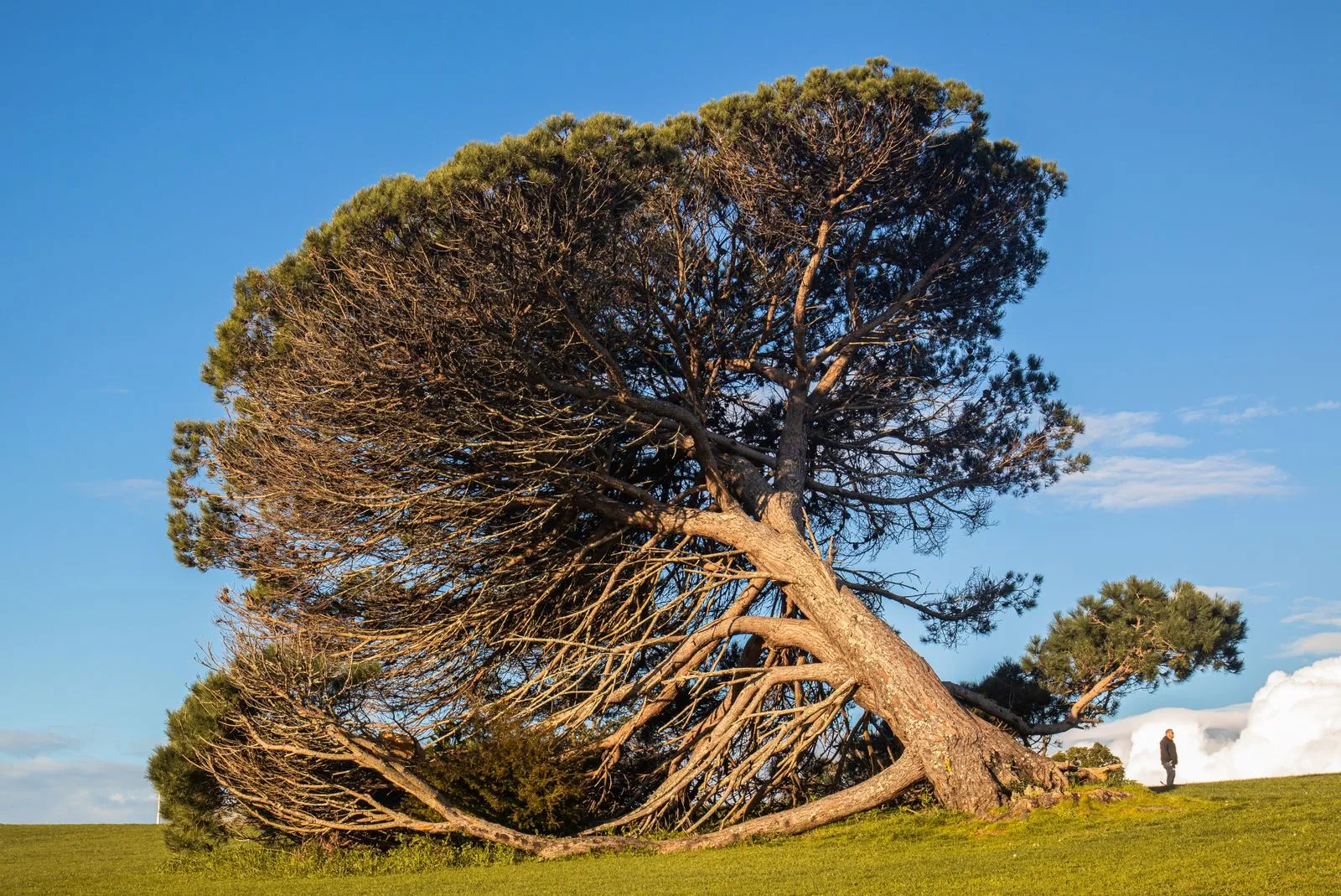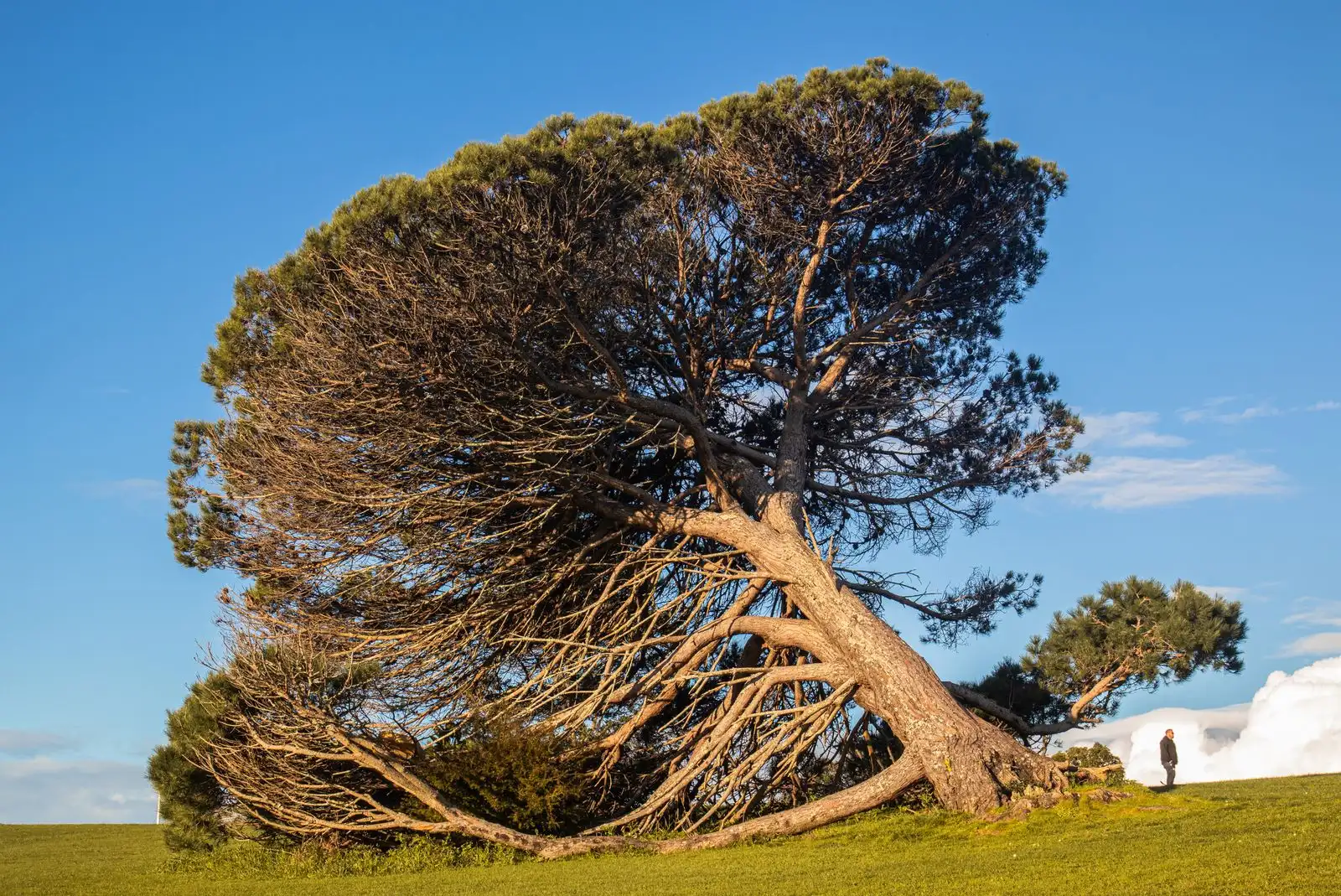
A tree that leans is not always a tree about to fall. Plenty of trees in Clark County have leaned for decades, growing toward light and thickening where the weight sits. What worries an arborist is a leaning tree that has changed, especially after a windy week on soaked ground.
Start with the timeline. If the lean looks the same in old photos, that is a good sign. If you noticed it for the first time after the last storm, treat it as new until someone trained says otherwise.
Is a Leaning Tree Dangerous in Clark County?
The lean itself is only part of the answer. A sudden lean, or one that is getting worse after a storm, deserves a prompt look from an arborist, because it can point to root or structural problems you cannot see from the lawn.
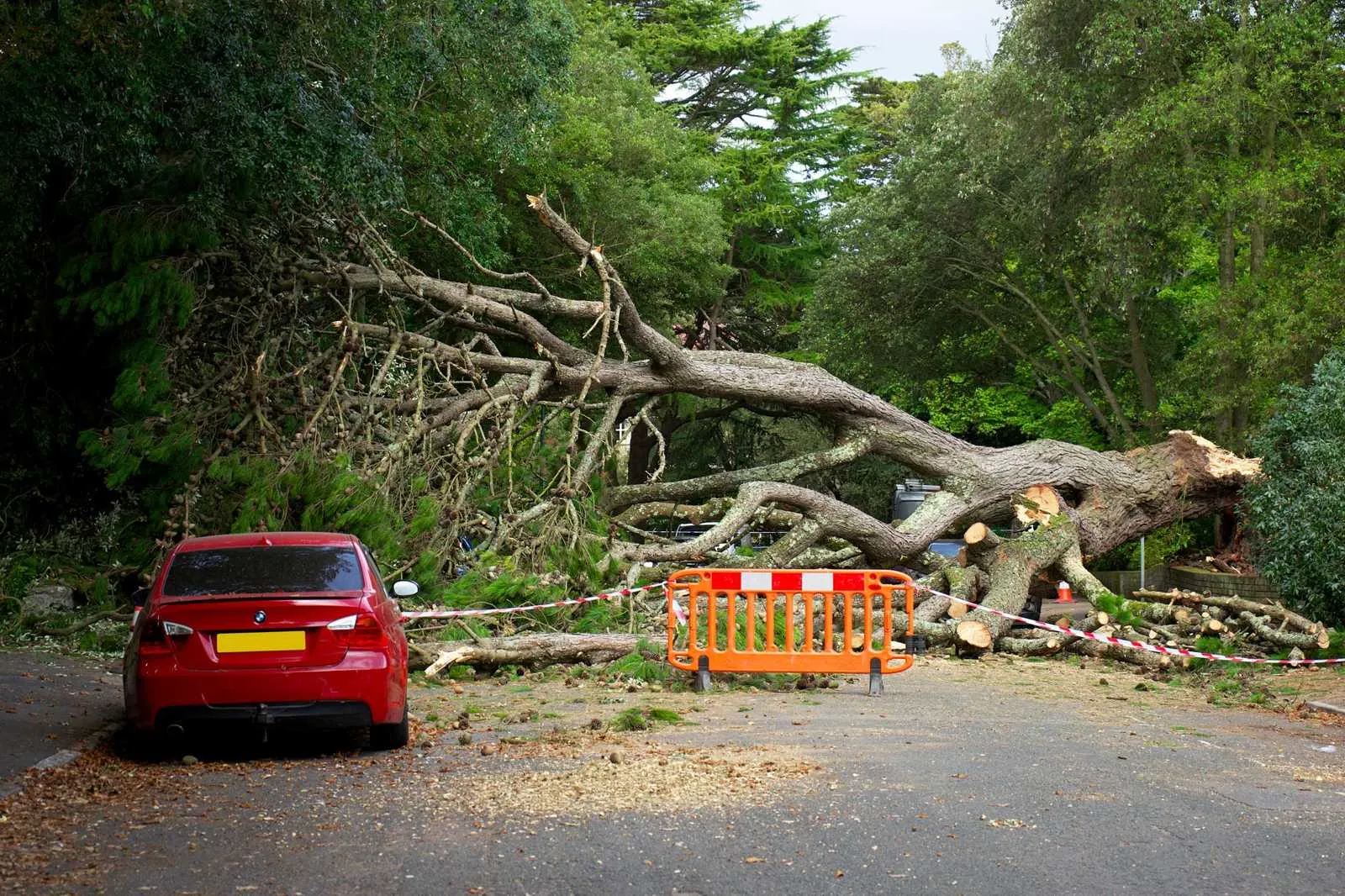
Wind does reach trees here. KOIN reported that gusts of up to 40 miles per hour uprooted trees across Clark County after an atmospheric river had already soaked the ground, including seven large trees at Otto Brown Community Park. The Columbian covered a November 2022 east wind through the Columbia River Gorge that knocked down trees and cut power.
Signs a Tree Leaning After a Storm Has Moved
Walk around the tree in daylight and look at the ground before you look up. These are the changes worth a call to an arborist.
- Heaved or cracked soil. The ground lifts or splits near the base, as if the root ball is tipping.
- Exposed or lifted roots. Roots that were buried last month are now showing.
- Cracks in the trunk or at a fork. A split that was not there before is a structural change.
- Decay at the base. Soft wood, fungus, or hollow spots can make a tree unsafe even when the trunk looks sound.
Take a photo from the same spot today and again in a few days. A tree that looks different between photos is moving.
What Stands in the Fall Zone Matters Most
TreesAreGood.org, the public education site of the International Society of Arboriculture, frames risk around a target: a home, a car, a play area, or a power line that a failing tree could hit. The same lean over an empty field and over a bedroom roof are very different problems.
It also lists the ways to lower risk: move the target, prune defective branches, cable and brace weak limbs (which it notes are not guarantees against failure), or remove the tree if the risk is too high.
What to Do Today With a Leaning Tree
- Keep people, pets, and cars out from under the side the tree leans toward.
- Photograph the base, the trunk, and the soil, with something in the frame for scale.
- Leave it alone. Do not pull it with a truck, prop it, or cut it yourself. TreesAreGood.org advises against doing storm-damaged tree work on your own and recommends an ISA Certified Arborist.
- If branches or the trunk touch a power line, stay well back and call 911 and Clark Public Utilities.
- Call an arborist. If the tree is already leaning on the house or shifting, that is a job for emergency tree service.
Priority Tree Service handles emergency tree service across Vancouver, WA and Clark County, including emergency tree service in Camas, WA, Washougal, WA, Battle Ground, WA, Ridgefield, WA, Salmon Creek, WA, and Hazel Dell, WA. Tell us on the call what the tree is leaning toward, and we will say how soon we can be there.
Fix, Monitor, or Remove a Leaning Tree
Once an ISA Certified Arborist has looked at the roots, the trunk, and the fall zone, the answer is usually one of four: leave it and watch it, prune to take weight off the lean, support it, or take it down.
If you want the finding in writing, for an insurer, an HOA, or a permit, our arborist reports and tree risk assessments come from a TRAQ-qualified arborist. When removal is the answer and the tree is tall, brittle, or over a roof, crane-assisted removal lifts it out in sections. Standard jobs go through tree removal.
Check the permit first. The City of Vancouver's tree permit page says removal inside city limits generally needs a permit, lists hazard trees under a Level III permit on developed single-family lots, and does not list an emergency exception. Call Urban Forestry at 360-487-8332 before cutting. Our post on tree removal permits in Clark County covers the other cities.
If the tree has already come down, read what to do first when a tree falls on your house. For the warning signs before a storm, see how to spot a hazardous tree.
Questions About a Leaning Tree
How Much Lean Is Too Much?
No single angle makes a tree safe or unsafe. Any lean you notice deserves a look because of what it may mean underneath. Whether the lean is new, whether the soil at the base is moving, and what stands in the fall zone count for more than the number of degrees.
Can I Wait Until After Winter?
Not if the lean is new, the soil is heaving, or the tree leans toward your home or a power line. An old lean with no change at the base can wait for a regular visit, and an arborist can tell you which one you have.
Will Homeowners Insurance Cover It?
That depends on your policy and on whether the tree has fallen. Our post on whether homeowners insurance covers tree removal in Washington explains what the state insurance commissioner says.
If you have a leaning tree you are not sure about, contact Priority Tree Service for a free estimate and an in-person look anywhere in Clark County.