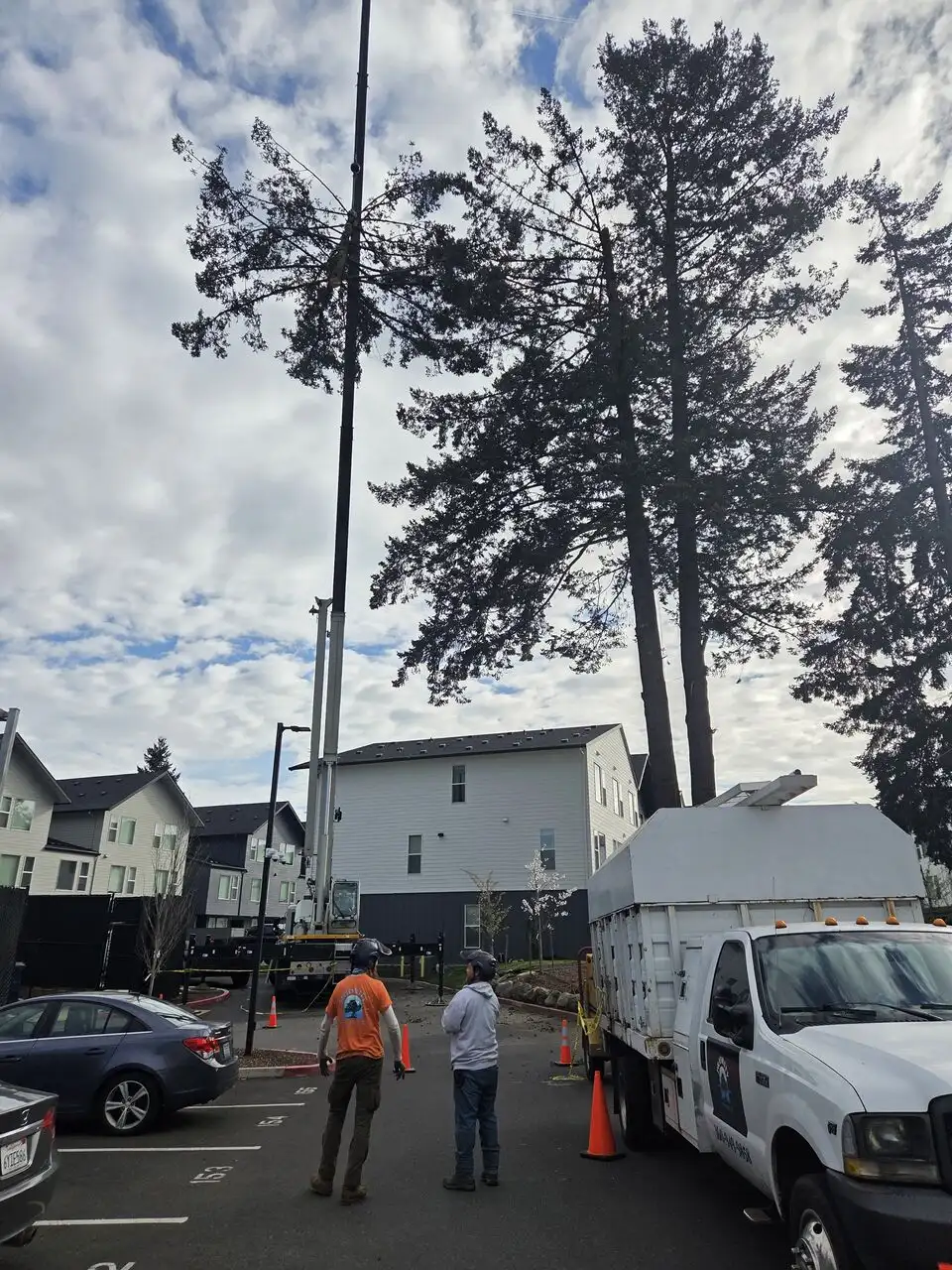
It usually starts at the top. A homeowner in Hockinson or Brush Prairie looks up at a fir that has been there longer than the house and notices the leader has gone rust red. A few weeks later a whole side of the crown matches it. Nothing else in the yard looks sick, the tree has never been touched, and the obvious question follows: what happened?
Four dry years happened. Douglas fir is the backbone of almost every wooded lot in this county, and right now it is the tree we get called out to look at more than any other.
Four drought years in a row, and the trees are keeping count
On April 8, 2026, the Washington Department of Ecology declared a drought emergency covering every watershed in the state. It was issued for low snowpack and years of stacked precipitation deficits, and Ecology notes it is the state's fourth consecutive drought declaration, a record under the framework set up in 1989. Southwest Washington sits inside that declaration along with everywhere else.
A mature Douglas fir does not die from one dry summer. It has the root system and the stored reserves to ride one out. What it cannot do is ride out 2023, then 2024, then 2025, then this one, each drawing down a little more than the winter put back. Late August is when the bill comes due, because soil moisture is at its lowest and the tree has been running on reserves for months.
Forecasters expect a strong El Nino pattern this winter, which here usually means warmer and drier than normal. Whatever else that is good for, it is not the wet winter a stressed fir needs. Plan around the tree you have, not the winter you are hoping for.
What drought stress actually looks like on a Douglas fir
Conifers hide their problems well. By the time a crown is obviously red, the tree has been in trouble for a season or two. Here is what to look for, roughly in the order it shows up.
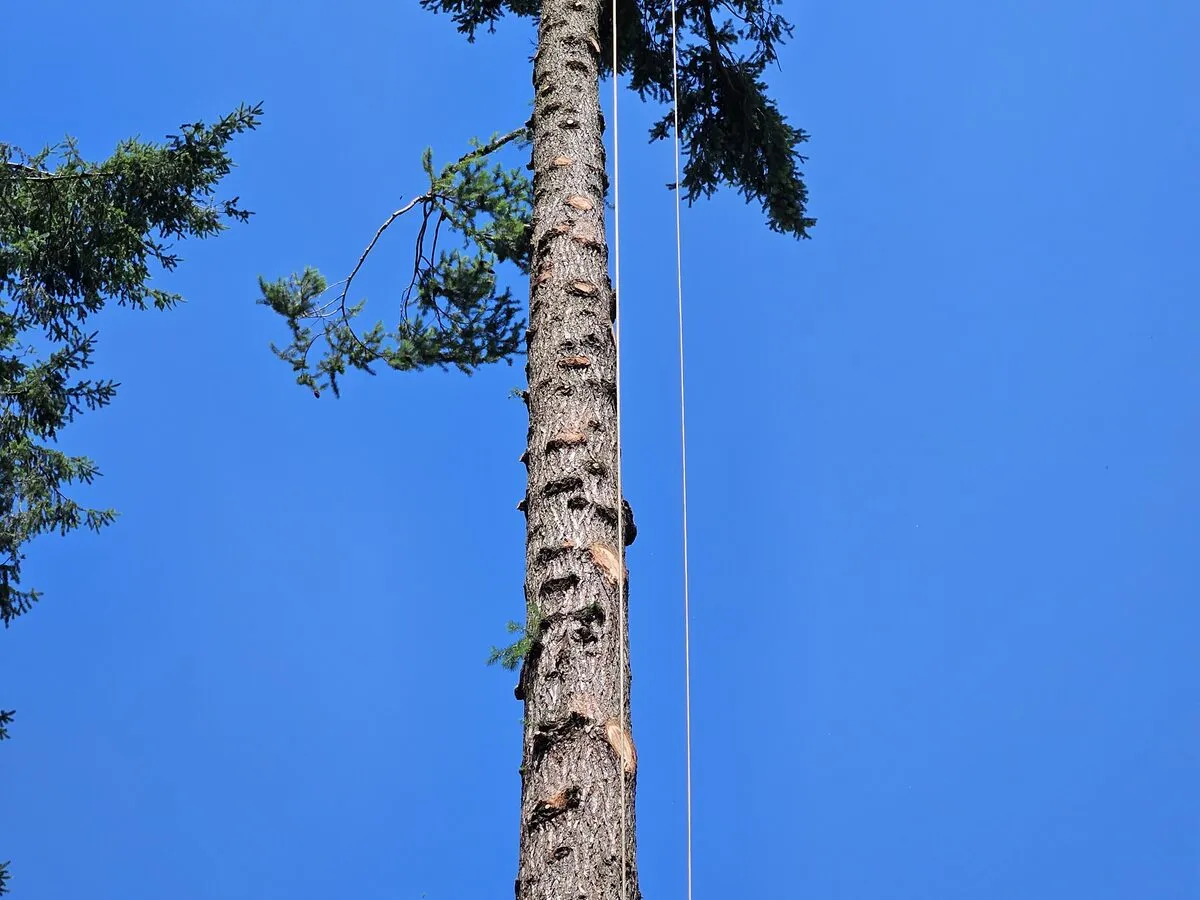
- Thinning from the top down and the outside in. Stand back far enough to see the whole tree against the sky. A healthy fir crown is dense up top. A stressed one goes see-through up there first.
- Short new growth. Compare this year's shoot extension at the branch tips against the previous two years behind it. When this year's growth is a fraction of last year's, the tree is rationing.
- Needle color moving the wrong way. Yellowing or reddish second-year needles that drop early are a documented drought response, along with dieback or death of the crown.
- Whole branches turning at once instead of a scatter of dead needles through the canopy.
- A huge cone crop out of nowhere. A tree under real stress will sometimes throw an enormous cone year. It is not a sign of health.
One thing that is normal and worries people every autumn: conifers shed their oldest interior needles each year, so yellow-brown needles deep inside the canopy that drop and leave green tips behind is just housekeeping. Browning that starts at the branch tips and works inward is the one to take seriously. We drew the same distinction for the other big native conifer in why western red cedars are dying in Clark County, and the logic carries over.
If an entire crown turned red over a few weeks and stayed red, the tree is almost certainly already dead. Firs do not come back from that.
The beetles do not start the problem. They finish it
Every time a big fir dies, someone asks whether it was a bug. Usually a bug was involved and was never the cause.
The flatheaded fir borer has been identified as a primary driver of Douglas fir dieback in this region, and the detail that matters to a homeowner is this: it takes trees that drought already weakened. Bark beetles work the same way. They build up in a stressed tree, then move to the next stressed tree nearby. A well-watered fir on a decent site defends itself with its own resin. A fir that has been running dry for four years cannot.
The scale is not small. Washington DNR's annual aerial survey mapped roughly 545,000 acres of forest with tree mortality, defoliation, or foliar disease in 2024, about 30,000 acres more than the year before and above the ten-year average of 519,000 acres. Federal surveys have recorded Douglas fir dying across hundreds of thousands of acres in Oregon and Washington combined.
Signs that insects have moved in: fine sawdust-like boring dust in the bark furrows and around the base, resin flecks or pitch on the trunk, and woodpecker work that strips outer bark and leaves pale patches on the stem. Woodpeckers are efficient. When they are hammering one particular fir, they know something.
There is no useful spray for this in a residential setting once the crown has gone. Preventive treatment is a conversation to have before a tree is attacked, not after.
What actually helps a fir that is still worth saving
Stressed is not dead. A fir with a thinning top and green branch tips is often a tree you can keep. What it needs is water and a root zone nobody touches.
Water long, slow, and rarely
Deep and infrequent beats often and shallow every time. WSU Extension's tree care guidance is to water the root zone slowly enough that the soil can absorb it, and notes that large trees can be allowed to dry down several inches before the next watering. A soaker hose looped out under the canopy toward the dripline and left running for hours does far more for a conifer than a lawn sprinkler wetting the top inch. Then let it dry between soakings, because roots sitting in constantly wet soil have their own set of problems.
Be realistic about scale. Watering makes a real difference to young trees, recent transplants, and mid-sized firs. Rehydrating a 120-foot tree with a garden hose is a rear-guard action, worth doing mostly when that particular tree is close enough to the house to matter.
Mulch, and keep it off the trunk
A two to four inch layer of coarse organic mulch over the root zone holds soil moisture, moderates temperature, and keeps mowers and string trimmers away from the flare. WSU suggests sizing the mulched ring to the tree, at least six feet across for a small one and wider as the trunk grows. Pull it back a few inches from the bark. Mulch piled against a trunk creates its own decay problem.
Leave the root zone alone
The fastest way to finish off a drought-stressed conifer is to build something near it. No trenching for irrigation or a fence line, no grade changes, no parking or equipment storage over the roots, no compacting the soil under the canopy. Skip the fertilizer too. A drought-stressed tree cannot use the nitrogen, and pushing new growth on a tree that already cannot supply what it has is the wrong direction.
Hold off on summer pruning
Fresh wounds on stressed conifers in warm weather are an invitation. If a stressed fir needs work that is not a safety issue, it can generally wait for the dormant season. Our guide to when to prune trees in the Pacific Northwest covers the timing in detail.
When a dead fir stops being a forest issue and becomes a house issue
A dead Douglas fir out in the middle of a wooded acre is habitat. A dead Douglas fir sixty feet from a roof is a schedule.
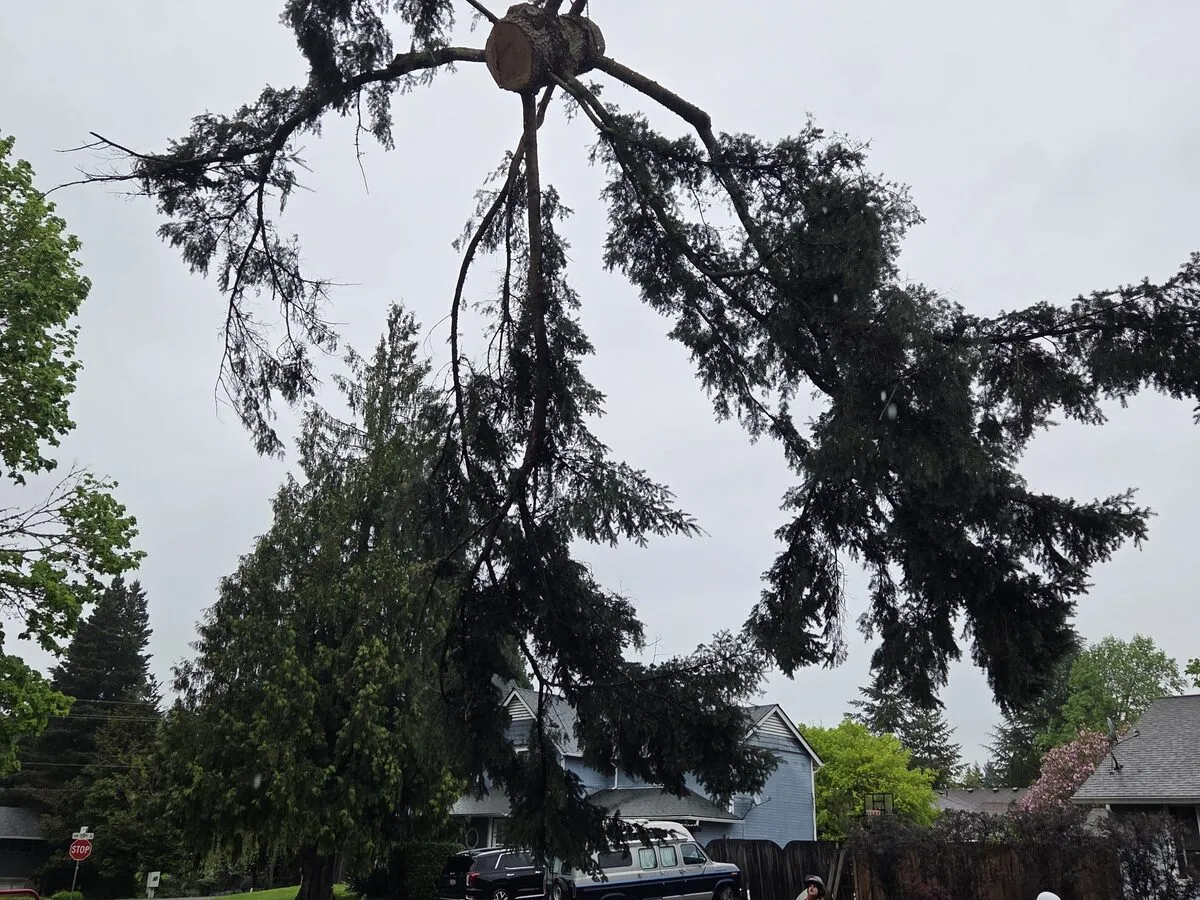
Dead conifers go brittle faster than most people expect. Fine limbs go first and start dropping, then larger limbs, then the top. Bark begins to slough, and that matters because a climber needs sound wood and sound bark to work a tree safely. A dead fir that could have been climbed in the fall may need a crane by spring, and eventually the safest approach becomes the only approach.
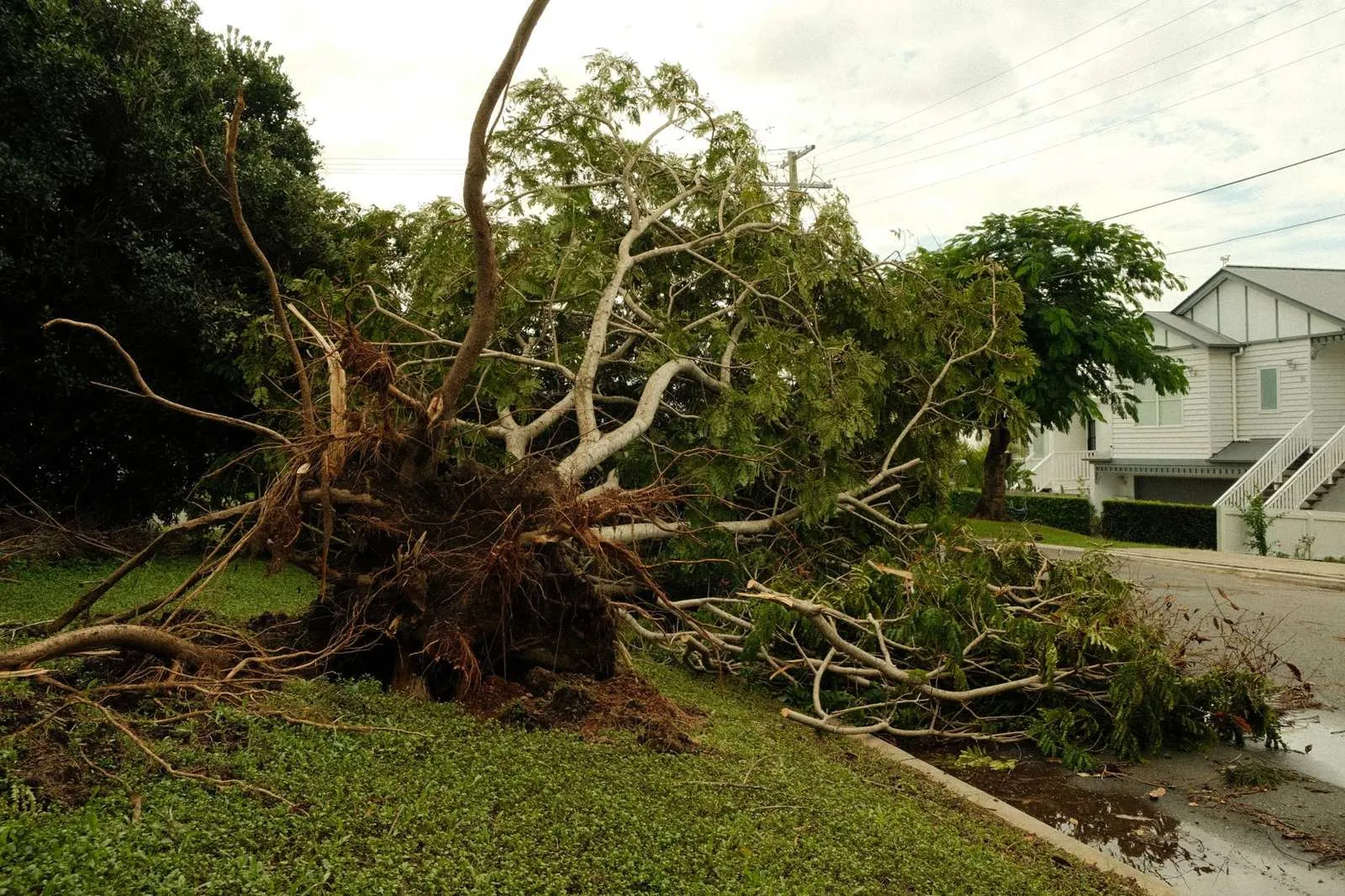
Walk the property and ask what sits under each tree: the house, a driveway you park in, a shop, a play structure, the neighbor's fence, a power line. That is target assessment, and it is what sets urgency. Our guides to spotting a hazardous tree and deciding when a tree has to come down both walk through it.
If you want a specific tree's condition documented, whether for your own decision, an insurer, or an HOA, an arborist report puts an ISA Certified Arborist's observations in writing. When the answer is that it has to go, removal is far simpler while the wood is still sound.
A short list for this fall
- Look at every large conifer within striking distance of a building, from far enough back to see the whole crown.
- Flag any tree with a thin or discolored top, and any tree with boring dust, pitch, or woodpecker work on the stem.
- Set a soaker hose under the trees you want to keep and give them long soaks into September.
- Mulch the root zones, keep the mulch off the trunks, and keep vehicles and projects out from under the canopy.
- Get anything already dead or clearly failing looked at before winter, while it is still a simple job.
Priority Tree Service covers all of Clark County, from Vancouver and Salmon Creek out to Battle Ground, Hockinson, and La Center. If you have a fir you are unsure about, ten minutes with an ISA Certified Arborist standing under it will tell you more than another season of watching it from the kitchen window.
Sources reviewed August 25, 2026: Washington Department of Ecology drought response, Washington DNR 2024 aerial detection survey, OSU Extension on Douglas-fir insect pests in drought-stressed trees, Northwest Natural Resource Group drought guidance, and WSU Extension tree care (C118).