Homeowners looking at a 110-foot Douglas fir ten feet from the living room often ask whether the job needs a crane. The honest answer is sometimes yes, and plenty of times no.
Most removals across Vancouver, WA and Clark County still come down by climbing and rigging. Crane tree removal earns its keep on trees that are too big, too dead, or too boxed in to lower safely through the yard.
Knowing the difference helps you read an estimate before heavy equipment rolls onto your street.
How Crane Tree Removal Actually Works
In a standard residential removal, a climber ropes into the tree, cuts limbs and trunk blocks from the top down, and lowers each piece through the yard on rigging lines. That works well when the tree is sound enough to climb and there is space below to land the wood.
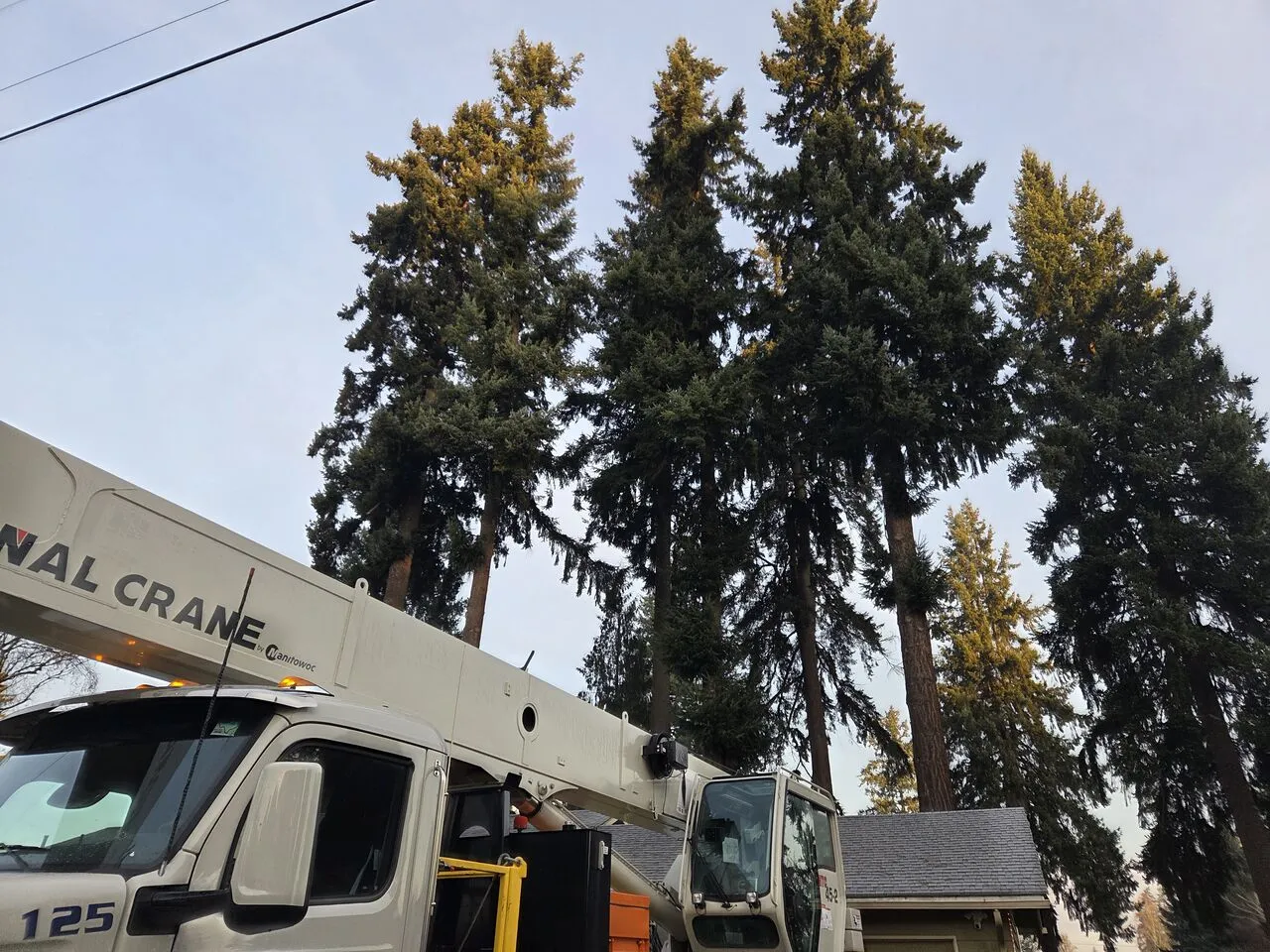
A crane flips the direction of travel. Instead of dropping sections downward, the crane boom reaches over the house or fence, our climber sets a sling on a balanced section of the tree, makes the cut, and the crane lifts that section straight up and out to the street or driveway where the ground crew chips the brush and loads the logs.
Nothing crashes onto the lawn. Nothing swings past the eaves on a rope. That control is the whole point of crane-assisted tree removal.
Five Situations Where a Crane Is the Smarter Call
Stephen Douglas, our ISA Certified Arborist, looks at tree condition, targets, and access before recommending a crane. Five situations in Clark County point straight to one.
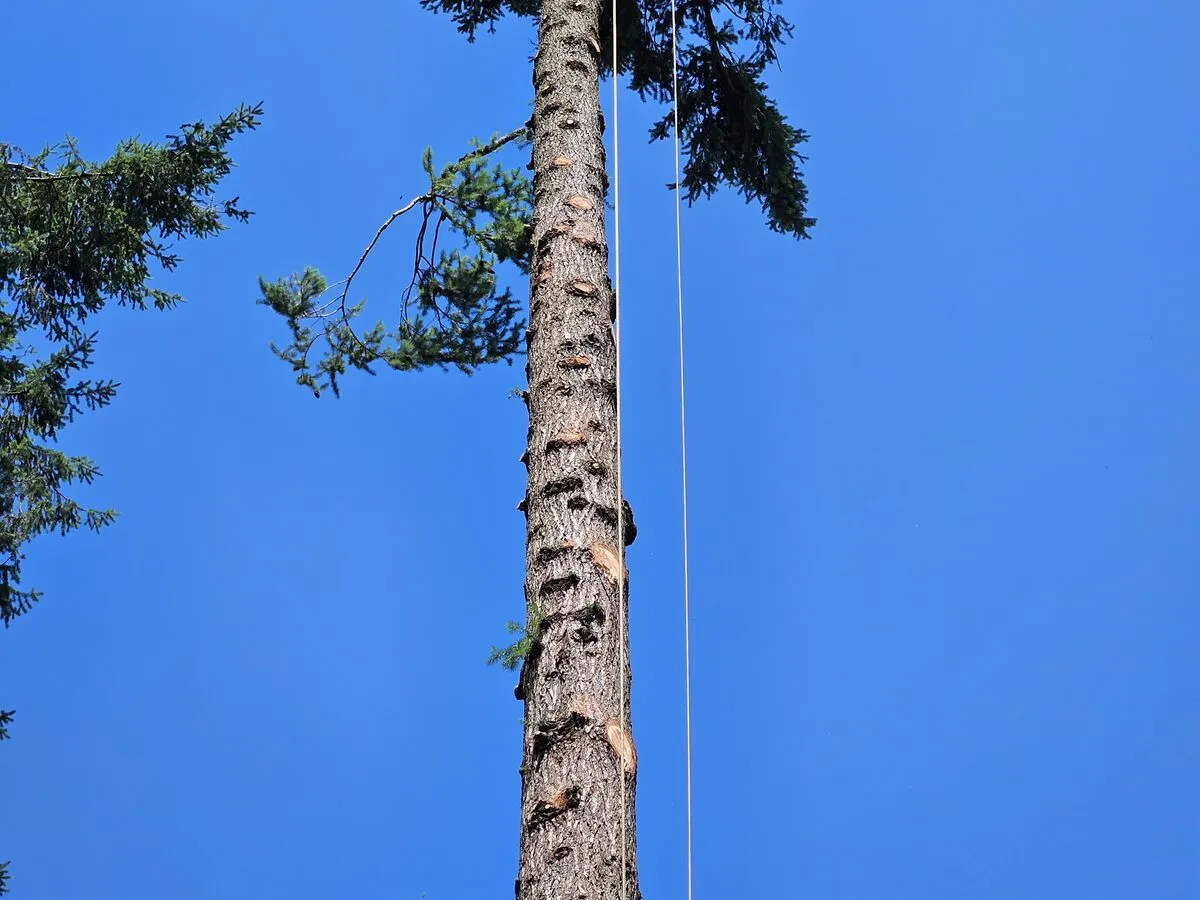
- Dead, hollow, or brittle trees. A dead conifer or decayed hardwood cannot always be trusted to hold a climber's rigging loads. Keeping dynamic rope shock off brittle wood protects both the climber and your roof.
- Tall firs directly over a home. Lots in Felida, Prune Hill in Camas, and older Vancouver neighborhoods often have towering firs with branches spread right across the shingles and no open drop zone anywhere underneath.
- Steep hillside and ravine lots. In Washougal and Camas, WA, a tree standing above a sloped backyard leaves nowhere to lower heavy logs without sliding them toward a deck or retaining wall.
- Boxed-in backyards with tight side gates. When every log would otherwise have to be carried by hand down a narrow passage in Hazel Dell or Salmon Creek, WA, lifting whole sections over the roof cuts hours of labor off the day.
- Storm-damaged trees resting on a structure. After a winter windstorm, a crane can lift a fallen trunk cleanly off a roof without adding downward weight to damaged rafters. That is why cranes pair closely with emergency tree service.
If a tree is leaning after a wet storm and you are unsure how urgent it is, see our post on whether a leaning tree after a storm is dangerous.
When Your Tree Does Not Need a Crane
Plenty of big trees do not justify a crane at all. If the wood is sound, the climber can rig safely, and there is a workable landing zone on the property, conventional tree removal is usually the better value.
Access can rule a crane out, too. A crane needs firm, level ground within reach of the tree, clear of overhead power lines. Long soft driveways on rural acreage in Battle Ground, WA, Brush Prairie, or Hockinson sometimes work far better with conventional climbing or a bucket truck, especially when winter rain has soaked the ground.
We tell homeowners straight at the estimate when a crane is not worth the money. Talking someone out of equipment they do not need is part of doing honest work.
Will a Crane Tear Up My Driveway or Lawn?
That is usually the second question people ask. A crane is heavy, and setting outriggers carelessly can crack concrete or sink into wet turf.
On a planned crane job, we check where the crane will sit before removal day. Often it sets up on the street or a solid section of driveway with proper pads under the outriggers, and we use ground protection where needed. Ironically, lifting sections cleanly over your beds, fence, and lawn usually causes far less yard disruption than dragging heavy logs through the grass during a conventional takedown.
Good preparation makes the day smooth. Moving vehicles out of the driveway, letting neighbors know if the street will be partially cone-marked, and confirming where wood or chips go are all covered in our guide on how to prepare your property for tree removal day.
What Moves the Price on Crane Tree Removal
Bringing in a crane adds equipment cost, yet on a truly tight or hazardous tree the hours it saves the crew can bring the total close to a conventional removal. A few specific variables drive the written quote.
- Weight and reach. Crane capacity is ruled by how heavy each pick is and how far from the truck the boom must reach. A 130-foot fir behind a deep house takes a larger crane than a 70-foot maple near the curb.
- Wood condition. Decayed trunks require smaller, lighter picks and more lifts so nothing breaks mid-air.
- Setup and traffic control. Parking on a quiet cul-de-sac in Ridgefield, WA is simple. Setting up on a busier street in Vancouver or Washougal, WA may require extra traffic control or matting.
- Overhead wires and permits. Energized utility lines near the swing path change the lift plan, and trees inside city limits often need permits first. The City of Vancouver tree permit page outlines when private removals require approval, and our Clark County permit guide covers neighboring cities.
Where both conventional rigging and crane tree removal are realistic options, we lay out the trade-offs in writing so you can weigh cost against yard and roof protection. You can also use our checklist on how to compare tree service estimates in Clark County before picking a bid.
What to Verify Before Hiring a Crane Crew
Heavy lifting over a home is not the job for an unverified contractor. TreesAreGood.org warns that pruning or removing large trees is dangerous work that belongs with people trained and equipped to work safely.
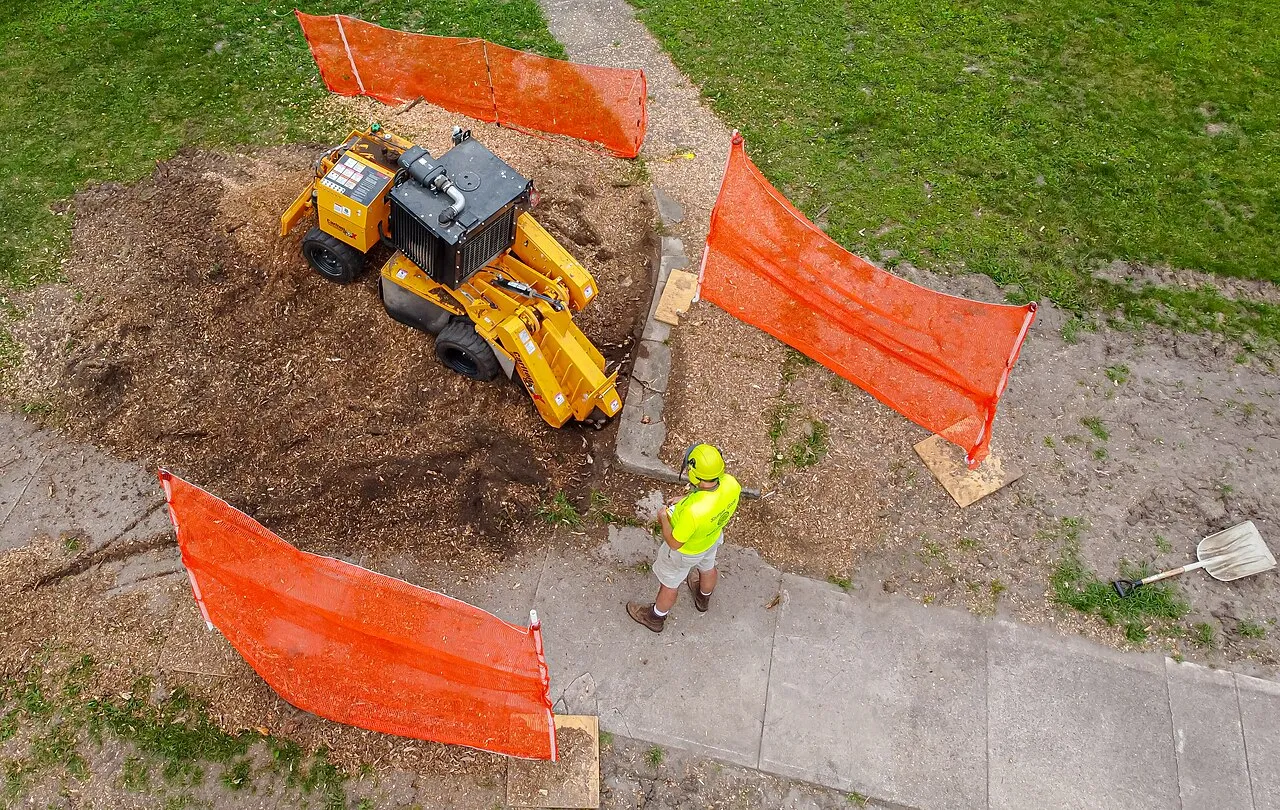
Before anyone sets outriggers at your curb, verify their Washington contractor registration and insurance through the Washington Department of Labor and Industries lookup tool. Priority Tree Service carries Washington contractor license PRIORTS781KC and full liability and workers' compensation coverage, and we coordinate the crane operator, lift plan, cleanup, and optional stump grinding so you only deal with one team.
Common Questions About Crane Tree Removal
Is Crane Tree Removal Always More Expensive Than Standard Removal?
It often adds some cost for the crane itself, though on a tall, dead, or tightly boxed-in tree the time saved can bring the price close to a conventional removal. It consistently buys safer working conditions and less impact on your home and landscaping.
Do I Have to Hire the Crane Company Myself?
No. Priority Tree Service schedules the crane operator, plans the pick points, protects the setup zone, and manages the entire crew from start to finish.
Can a Crane Remove a Tree in Winter Rain?
Yes, as long as the crane has firm, level paving or street access to set up on and wind speeds stay within safe operating limits. Soft, saturated lawns are avoided.
How Do I Know Whether My Tree Even Needs Removal?
Start with an honest look from an arborist. Our post on signs a tree needs to come down explains what we look for, and our arborist reports give you a written assessment when a city, HOA, or insurer asks for one.
Have a large or risky tree near your home in Vancouver, WA or Clark County? Call (360) 949-9858 or contact Priority Tree Service for a free written estimate, and we will tell you straight whether a crane makes sense for your yard.