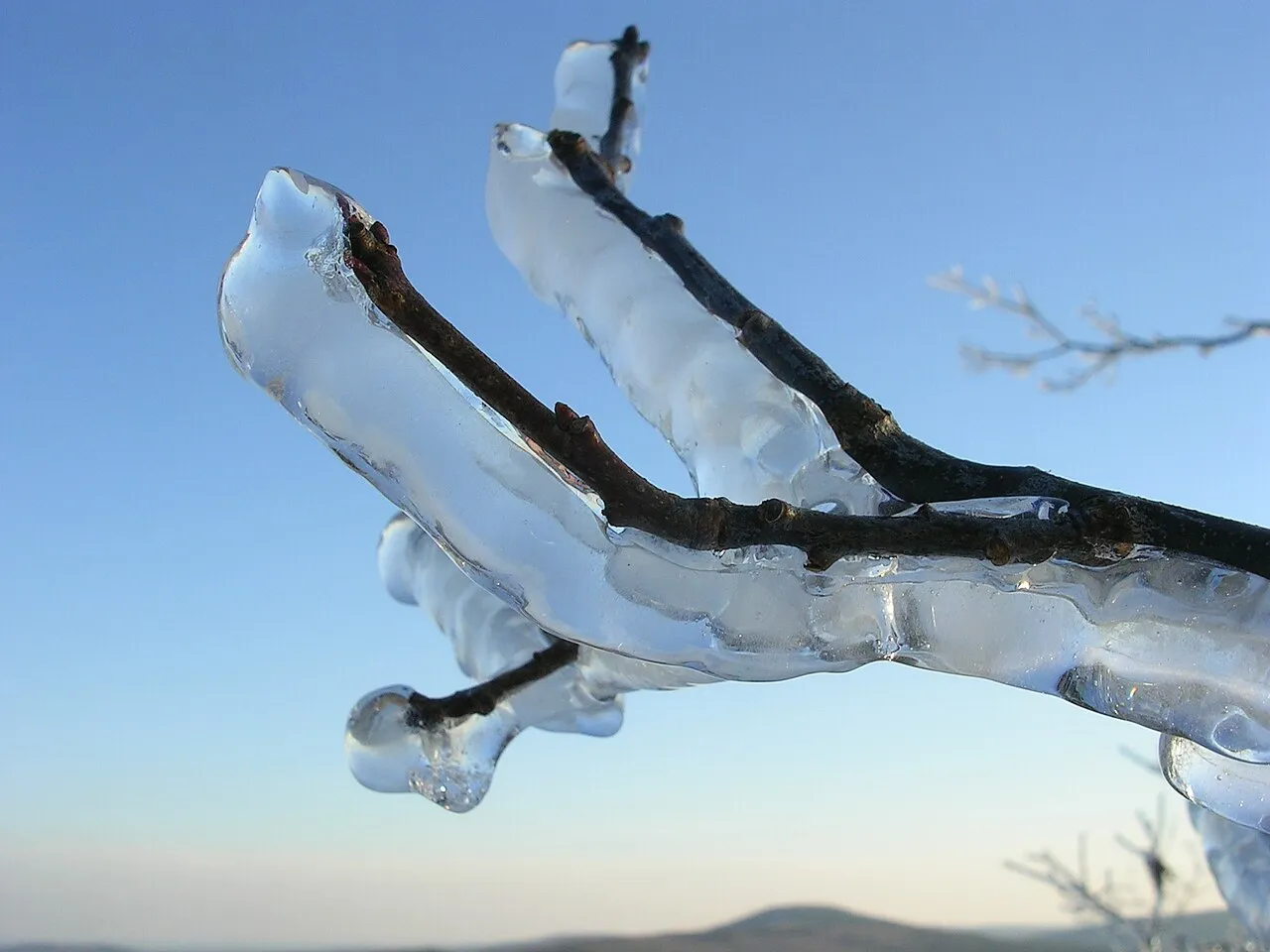
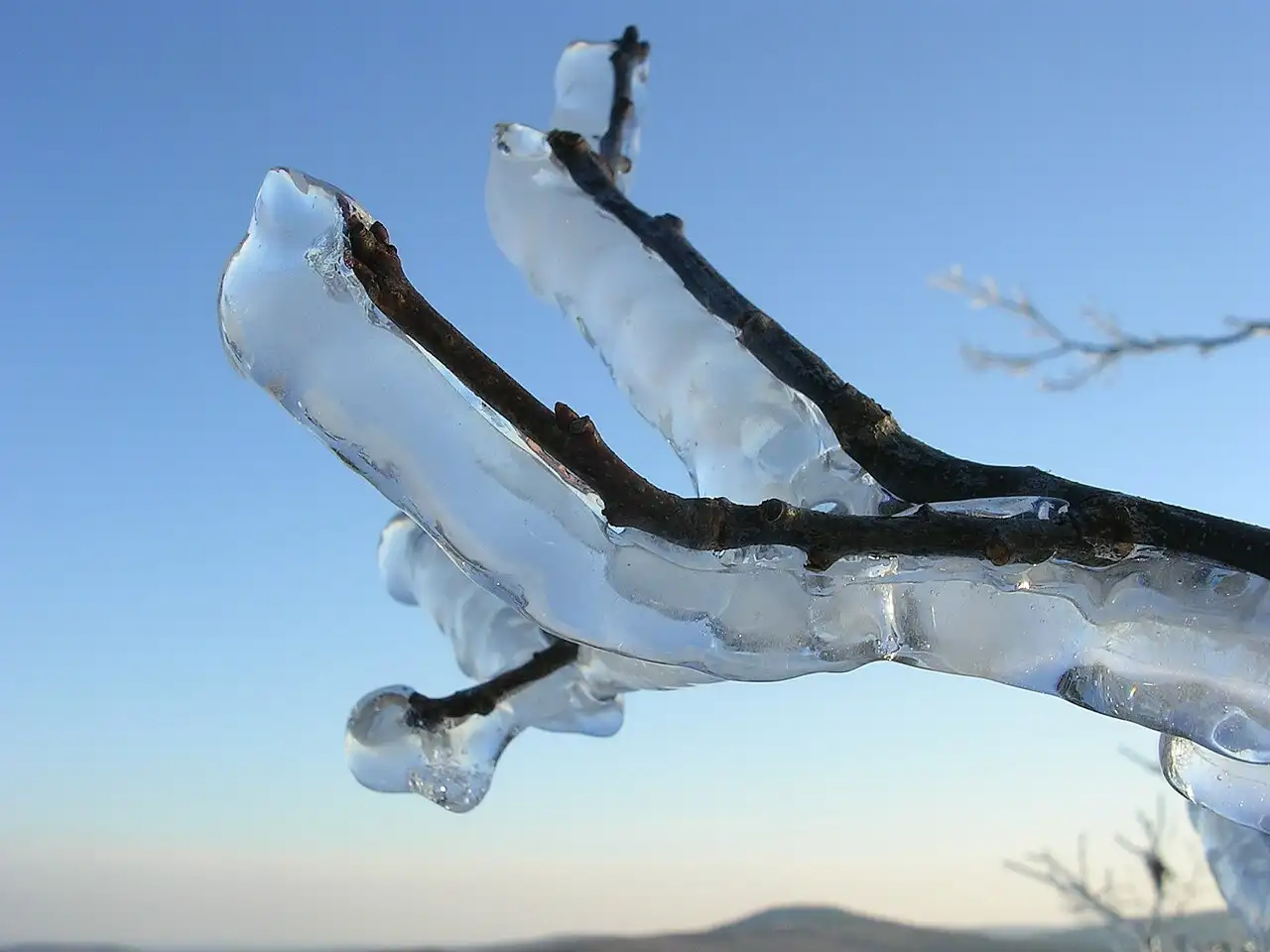
When freezing rain rolls out of the Columbia River Gorge, Clark County trees take weight they were never built to hold. Limbs bow over driveways, tops snap out of tall firs, and ice-coated branches crack all night. Knowing how to handle ice storm tree damage starts with resisting the urge to rush outside with a broom or a saw.
Most storm injuries happen after the storm stops. People walk under cracked wood, pull on bent limbs, or try to knock ice loose before the thaw.
Step One: Wait Out the Freeze Before Touching Branches
Leave ice on the tree. Frozen wood is brittle, and shaking or knocking branches to clear ice snaps limbs that would have bounced back once the temperature climbed. Wait for the thaw.
Stay well back while ice is still melting, too. Branches shed chunks of glaze all at once, and a cracked limb that held overnight can let go when the sun hits it at noon. Keep cars, kids, and pets out from under loaded canopies in Vancouver, Camas, Washougal, and Battle Ground until the ice drops.
Check overhead wires before you step onto the lawn. Clark Public Utilities says to stay at least 50 feet away from any downed or tangled power line and to report downed lines at 360-992-8000 or 360-992-3000. If a branch is resting on a line, leave it to the utility.
Why Ice Damage Hits Clark County Trees So Hard
Cold east wind out of the Gorge brings freezing rain into Washougal, Camas, Orchards, and east Vancouver while rain still falls elsewhere. Ice coats every twig and needle evenly, turning a normal canopy into a heavy load that pulls straight down.
Different Clark County trees react in very different ways.
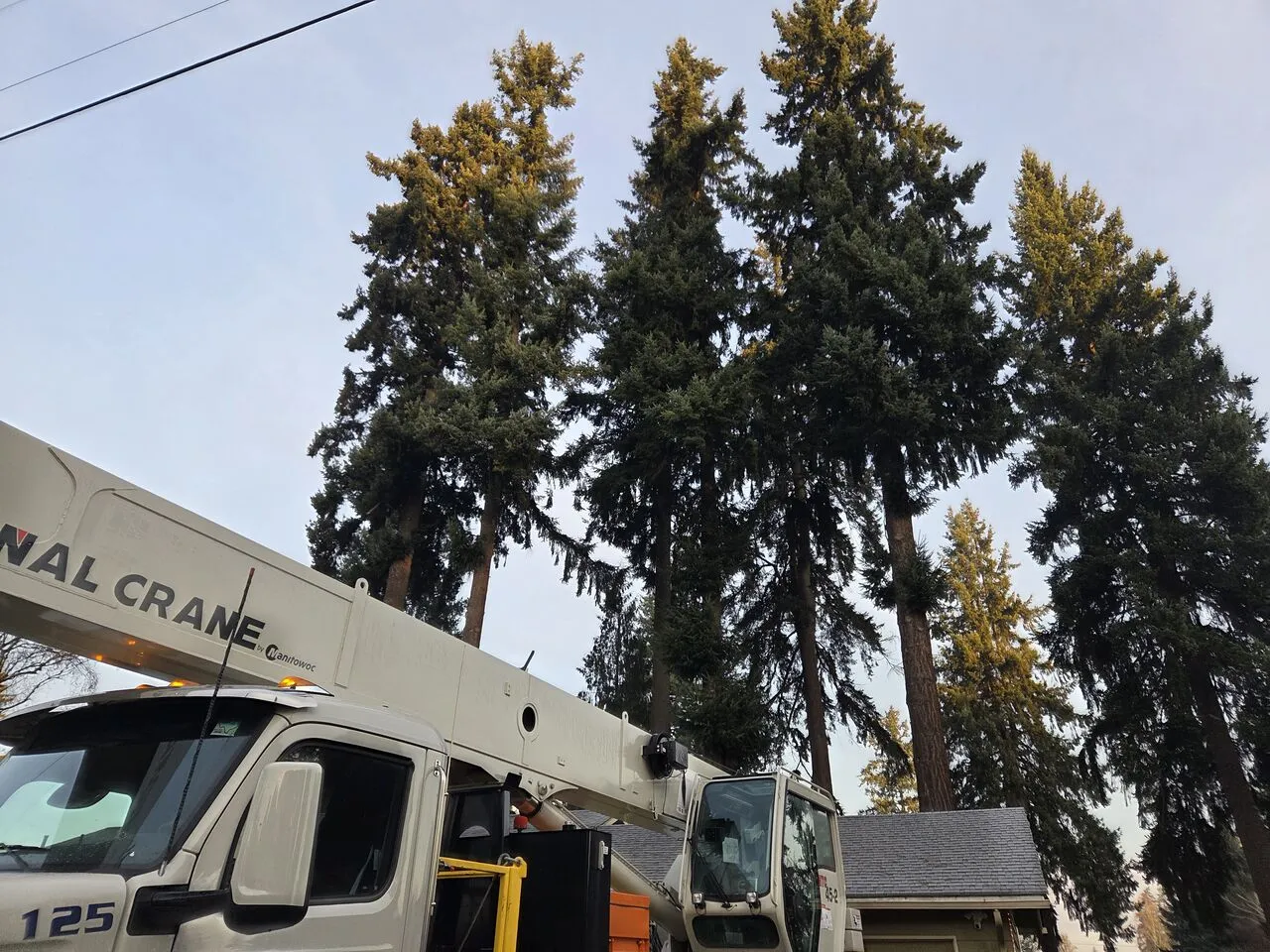
- Douglas fir and western red cedar. Evergreens hold ice on their needles, so top leaders snap out and lower limbs tear away from the trunk when freezing rain stacks up.
- Bigleaf maple and older hardwoods. Wide spreading limbs with tight V-shaped forks split down the union under ice weight.
- Arborvitae and laurel privacy hedges. Multi-stemmed hedges splay wide open under wet snow and glaze, leaving gaps down the middle.
- Previously topped trees. Washington State University's PNW Gardener's Handbook warns that stub cuts and topping produce weak attachments that are far more likely to fail under wind, ice, and snow loads.
If your yard has older trees that were topped years ago, inspect those forks first after a freeze. Our guide on why a good arborist will never top your tree explains why those regrowth shoots tear out so easily.
Save, Prune, or Remove After Ice Storm Tree Damage
Once the ice melts and the ground is safe to walk, step back and look at the whole tree. Do not judge it from one broken limb on the grass. Trees often look terrible the morning after a freeze and still have plenty of healthy structure left.
An ISA Certified Arborist reads four things when deciding whether a storm-damaged tree in Clark County should stay or come down.
- How much of the crown survived. A healthy tree that lost a few side branches usually recovers with clean corrective pruning. A tree that lost most of its upper canopy or main leader has a much harder road back.
- Whether the main trunk split. A vertical crack running down the trunk or through a main fork is a serious structural failure, especially if the tree sits near a house or driveway.
- What happened at the roots. Heaved soil, fresh cracks in the turf, or a new lean mean the root plate shifted. Read our guide on what to do with a leaning tree after a storm if the trunk moved.
- What stands underneath it. TreesAreGood.org ties tree risk directly to the target underneath, such as a roof, a driveway, or a sidewalk. A torn top out on Brush Prairie acreage is a different call than the same split hanging over a Hazel Dell bedroom.
Small evergreens and young deciduous trees bent nearly to the ground by snow or glaze often straighten on their own over several days after the thaw. Give them time before cutting. Heavy stakes and tight straps usually do more harm than good.
Clean Pruning Cuts After a Freeze
Broken stubs left jagged on the tree invite decay and tear bark further down the trunk. WSU's pruning handbook notes that stub cuts delay compartmentalization, which is how a tree walls off decay after an injury. Clean cuts back to a sound lateral branch or the branch collar give the tree its best chance to close over the wound.
Skip wound paint, tar, and pruning sealers. WSU states that painting or tarring tree wounds is largely unnecessary. Clean cuts and healthy vigor do the actual work.
Keep storm cleanup focused on broken, hanging, and split wood. Heavy shaping can wait until the tree recovers, and our post on the best time to prune trees in the Pacific Northwest covers the normal pruning calendar.
For splayed hedges that do not bounce back after snow or ice, hedge and shrub trimming cleans up torn tips and restores an even shape.
When Ice Storm Damage Needs a Crew Right Away
A broken branch sitting on the lawn can wait a week. A limb hung up high in the crown, resting on your roof, or blocking your driveway cannot. TreesAreGood.org warns that pruning or removing storm-damaged trees is dangerous work best left to a professional arborist.
Broken wood under tension springs unpredictably when cut. Never climb onto an icy roof or set a ladder under a hanging limb. Call for emergency tree service instead, and tell us what broke, what sits underneath it, and whether any wires are involved.
Priority Tree Service responds across Clark County, including emergency tree service in Camas, WA, Washougal, WA, Battle Ground, WA, and Salmon Creek, WA. If a tree hit your house, read what to do first when a tree falls on your house and our guide on homeowners insurance and tree removal in Washington.
For trees that only need broken limbs cleared and stub cuts cleaned up, our tree trimming and pruning crew handles the canopy work. When a split trunk or heavy crown loss means the tree has to come down, we handle tree removal and written arborist reports.
Inside Vancouver city limits, the City of Vancouver tree permit page places hazard trees on developed single-family lots under a Level III permit. Call Urban Forestry at 360-487-8332 before cutting, or read our Clark County tree removal permit guide for surrounding cities.
Common Questions About Ice Storm Tree Damage
Should I Knock Ice or Snow Off My Tree Branches?
Never knock or shake ice off frozen branches. Cold wood snaps easily under sudden pressure, and falling ice or springing limbs can hurt anyone standing underneath. Let freezing rain melt naturally.
Will a Bent Arborvitae or Young Tree Straighten Back Up?
Often yes, once the weight melts. Give bent evergreens and young hardwoods several days after the thaw to rebound before deciding to prune or remove them.
Should I Paint Torn Bark or Broken Branch Wounds?
No. WSU Extension advises that wound paints and tars are largely unnecessary. Having an arborist make clean cuts back to sound wood helps the tree compartmentalize and close over the injury naturally.
Can You Trim Storm-Damaged Branches in Freezing Weather?
Dangerous hanging limbs and branches resting on a house come down right away regardless of temperature. Routine cleanup and corrective pruning are better done once the freeze breaks.
If freezing rain or snow left broken limbs or a split trunk at your place in Vancouver, WA or Clark County, call (360) 949-9858 or contact Priority Tree Service for a free written estimate from our ISA Certified Arborist-led crew.